
Say Goodbye to Weeds: How Coir Mulch Mats Keep Your Garden Clean and Healthy
Starting your first garden can be exciting, but anyone new to gardening quickly discovers that weeds are one of the biggest challenges. They compete with your plants for water, nutrients, and sunlight, and can make even a small garden look untidy. That’s where coir mulch mats come in. These natural, eco-friendly mats are designed to suppress weeds, conserve moisture, and improve overall plant health all while being sustainable and easy to use.
What Are Coir Mulch Mats?
Coir mulch mats are made from coconut husk fibers that are pressed into durable mats. Unlike synthetic weed barriers, coir mats are completely biodegradable and safe for the environment. They work by forming a protective layer over the soil, which blocks sunlight from reaching weed seeds, preventing them from germinating. At the same time, the mats allow water, air, and nutrients to pass through to your plants’ roots.
Benefits of Using Coir Mulch Mats
- Natural Weed Control
By blocking light, coir mulch mats drastically reduce the number of weeds that emerge in your garden. This means less time spent weeding and more time enjoying your plants. - Moisture Retention
Coir fibers retain water efficiently, keeping soil moist for longer periods. This reduces the frequency of watering, particularly during dry spells, and helps young plants establish quickly. - Soil Protection and Health
Coir mats help prevent soil erosion and compaction. They maintain a healthy environment for plant roots by improving aeration and allowing nutrients to circulate naturally. - Eco-Friendly and Biodegradable
Unlike plastic weed barriers, coir mats break down naturally over time, returning nutrients to the soil and leaving no harmful residues. This makes them ideal for environmentally conscious gardeners. - Versatile for Any Garden
Coir mulch mats work in flower beds, vegetable patches, raised beds, and even container gardens. They are flexible and easy to cut to fit any shape or size of planting area.
How to Use Coir Mulch Mats in Your Garden
- Prepare Your Garden Bed
Clear the area of large weeds and debris. Loosen the soil lightly so that your plants can establish their roots easily. - Lay the Coir Mulch Mat
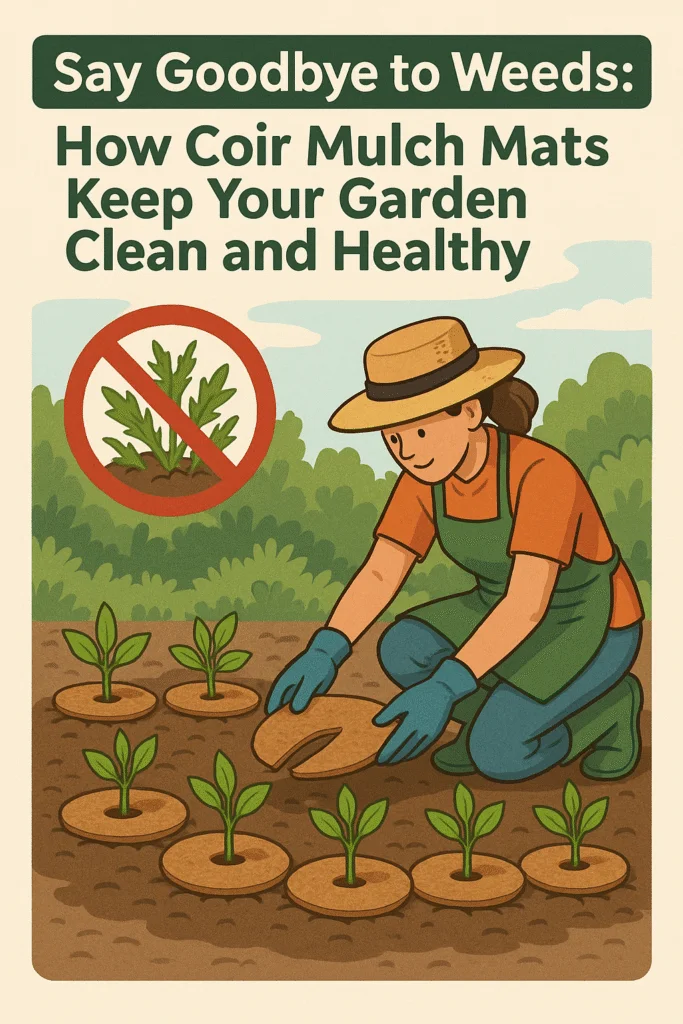
Place the mat over the soil, covering the entire planting area. Overlap edges slightly to prevent weeds from sneaking through. - Secure the Mat
Use garden staples, pegs, or pins to keep the mat in place, particularly on slopes or uneven ground. - Planting Through the Mat
Coir mats are easy to cut or puncture. Make small holes where you want to plant your seeds or seedlings. Plant as usual, ensuring roots are in contact with the soil beneath the mat. - Water and Maintain
Water thoroughly after planting. The coir mat will retain moisture and slowly decompose, enriching the soil as it breaks down.
Case Study: A First Time Gardener’s Experience
When Jane, a beginner gardener, started her first vegetable patch, she struggled with weeds overtaking her seedlings. After switching to coir mulch mats, she noticed a remarkable difference. Not only were her plants healthier, but the time she spent weeding dropped dramatically. Tomatoes, carrots, and herbs thrived under the protective layer of coir, and the soil remained moist even during hot summer days. Within months, the mats had begun to decompose naturally, leaving behind rich, fibrous matter that improved soil structure
Tips for Best Results
- Overlap mats at the edges to prevent weeds from sneaking in.
- Water the mat lightly after installation to help it settle and begin integrating with the soil.
- Combine coir mats with organic mulch for added moisture retention and soil enrichment.
- Replace mats every 1–2 seasons, depending on decomposition rate and plant growth.
Coir Mulch Mat Quick Checklist
- Clear garden bed of large weeds and debris
- Loosen soil lightly for better root growth
- Lay coir mulch mat over the soil, covering the entire area
- Overlap edges slightly to prevent weeds from sneaking through
- Secure mat with garden staples, pegs, or pins
- Cut small holes for seeds or seedlings and plant as usual
- Water thoroughly after planting
- Monitor soil moisture; water as needed
- Replace mats every 1–2 seasons as they decompose
- Optional: add extra mulch on top for extra moisture and protection
Disclaimer: This article is provided for general information only and does not constitute engineering, environmental, design, legal, or professional advice. Project-specific advice should always be obtained from suitably qualified professionals.