
Easy Seed Starting with Coir Discs: Hassle Free and Eco-Friendly
Starting seeds at home can feel intimidating for first time gardeners. Traditional methods often involve messy soil, precise watering, and a lot of trial and error. Coir discs offer a simple, clean, and eco-friendly solution that makes seed starting easy, even for beginners. Made from natural coconut husk fibers, coir discs provide a sustainable medium that retains moisture, supports strong root development, and eliminates the need for soil.
What Are Coir Discs?
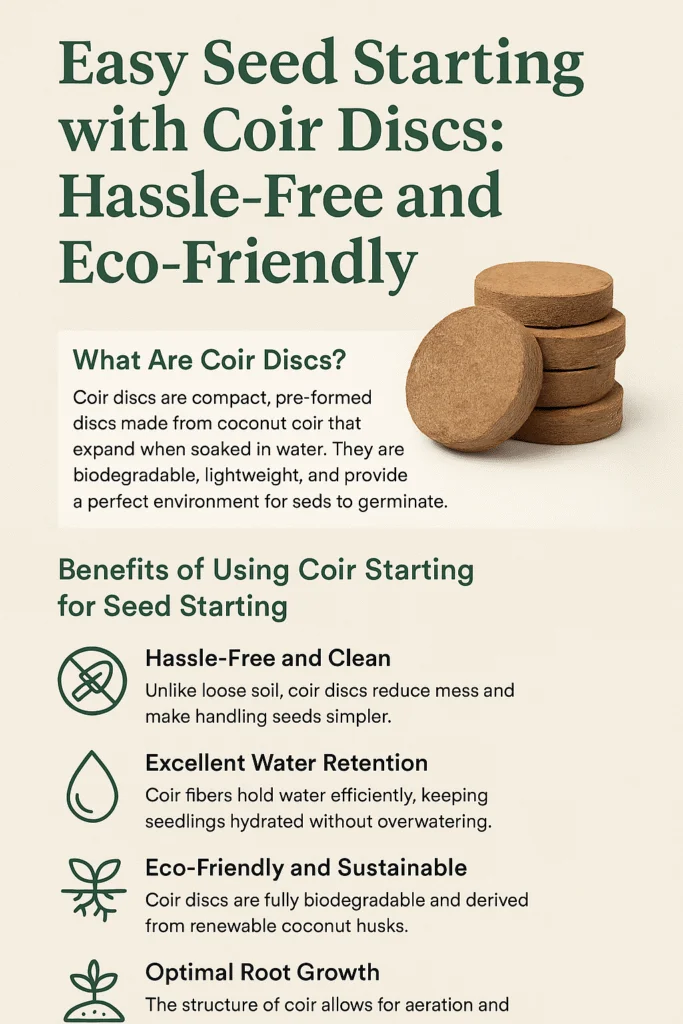
Coir discs are compact, pre formed discs made from coconut coir that expand when soaked in water. They are biodegradable, lightweight, and provide a perfect environment for seeds to germinate. Once soaked, each disc becomes a fluffy, nutrient rich mini planting bed that holds moisture evenly, ensuring young seedlings have everything they need to grow strong roots.
Lorem ipsum dolor sit a met, consectetur adipiscing elit. Ut elit tellus, luctus nec ullamcorper mattis, pulvinar dapibus leo.
Benefits of Using Coir Discs for Seed Starting
- Hassle Free and Clean
Unlike loose soil, coir discs reduce mess and make handling seeds simpler. There’s no need for trays of soil or frequent cleanups. - Excellent Water Retention
Coir fibers hold water efficiently, keeping seedlings hydrated without overwatering. This reduces the risk of seedlings drying out or suffering from root rot. - Eco-Friendly and Sustainable
Coir discs are fully biodegradable and derived from renewable coconut husks, making them an environmentally conscious choice. - Optimal Root Growth
The structure of coir allows for aeration and prevents roots from becoming compacted. Seedlings establish faster and develop strong, healthy roots.
How to Get Started with Coir Discs
- Choose Your Seeds
Select seeds based on your garden plans. Common beginner friendly seeds include tomatoes, peppers, lettuce, radish, basil, and coriander. Each seed type has specific germination times, so check the packet instructions. - Prepare the Coir Disc
Place each dry coir disc into a tray or container. Add water slowly and watch as the disc expands into a soft, fluffy planting medium. Depending on the disc size, it may take a few minutes to fully expand. Fluff the coir lightly to ensure it’s evenly hydrated. - Plant the Seeds
Create a small indentation in the center of the coir disc using your finger or a small tool. Place 1–2 seeds into the hole. Cover lightly with a thin layer of coir, as seeds need darkness to germinate. - Provide Adequate Water
Mist the discs gently or water from the bottom to avoid washing away seeds. Keep the coir consistently moist but not waterlogged. - Ensure Proper Light and Temperature
Place the tray in a warm, bright location. Seedlings need around 12–16 hours of light daily to grow strong. If natural sunlight is limited, a small grow light can be used. - Monitor Growth
Within days to weeks, depending on seed type, seedlings will begin to sprout. Keep an eye on moisture levels and watch for any signs of overwatering or mold. - Transplanting
Once seedlings are strong enough and have developed a few true leaves, they can be transplanted directly into your garden, pots, or raised beds. Simply plant the entire coir disc with the seedling its biodegradable nature means it will naturally integrate into the soil, supporting the plant as it grows.
Case Study: A Beginner Gardener’s Experience
Emma, a first time gardener, wanted to grow herbs on her kitchen windowsill but was nervous about using soil and keeping seeds alive. She discovered coir discs and decided to give them a try. Emma placed a few coir discs in a small tray, added water, and watched them expand. She planted basil, coriander, and lettuce seeds.
Within a week, tiny green shoots appeared. Emma was amazed at how easy it was to maintain moisture and watch her seeds grow without messy soil. When the seedlings were ready for transplanting, she simply moved the entire discs into pots. Her herbs flourished, and the coir discs decomposed naturally, enriching the soil. The process was clean, simple, and gave her confidence to try growing more varieties in the future.
Tips for Best Results
- Use fresh seeds for better germination rates.
- Keep coir discs moist but avoid overwatering.
- Rotate trays for even light exposure.
- Label your seeds to keep track of different varieties.
- Once seedlings are transplanted, water carefully to help them acclimate to their new environment.
Disclaimer: This article is provided for general information only and does not constitute engineering, environmental, design, legal, or professional advice. Project-specific advice should always be obtained from suitably qualified professionals.