
Creative Gardening with Coir Yarn: Tying, Trellising, and Supporting Plants Naturally
Gardening is an art as much as it is a science, and using natural, sustainable materials can make your garden both beautiful and eco-friendly. Coir yarn, made from the fibers of coconut husks, is one of the most versatile and environmentally friendly tools for gardeners. Lightweight, biodegradable, and strong, coir yarn can be used to tie plants, create trellises, and provide support without harming your garden or the planet. This guide will walk beginners through the creative ways to use coir yarn in their gardening projects.
Why Choose Coir Yarn?
Coir yarn is naturally resistant to rot, UV rays, and moisture, making it ideal for outdoor use. Unlike synthetic twines, it breaks down over time, returning organic matter to the soil. For beginners, this means you can experiment freely without worrying about harming your plants or leaving plastic waste behind.
Some benefits include:
- Eco-friendly: Fully biodegradable and sustainable.
- Strong and durable: Supports even heavier plants like tomatoes or beans.
- Gentle on plants: Soft fibers reduce the risk of cutting stems or branches.
- Versatile: Perfect for tying, trellising, or crafting plant supports.
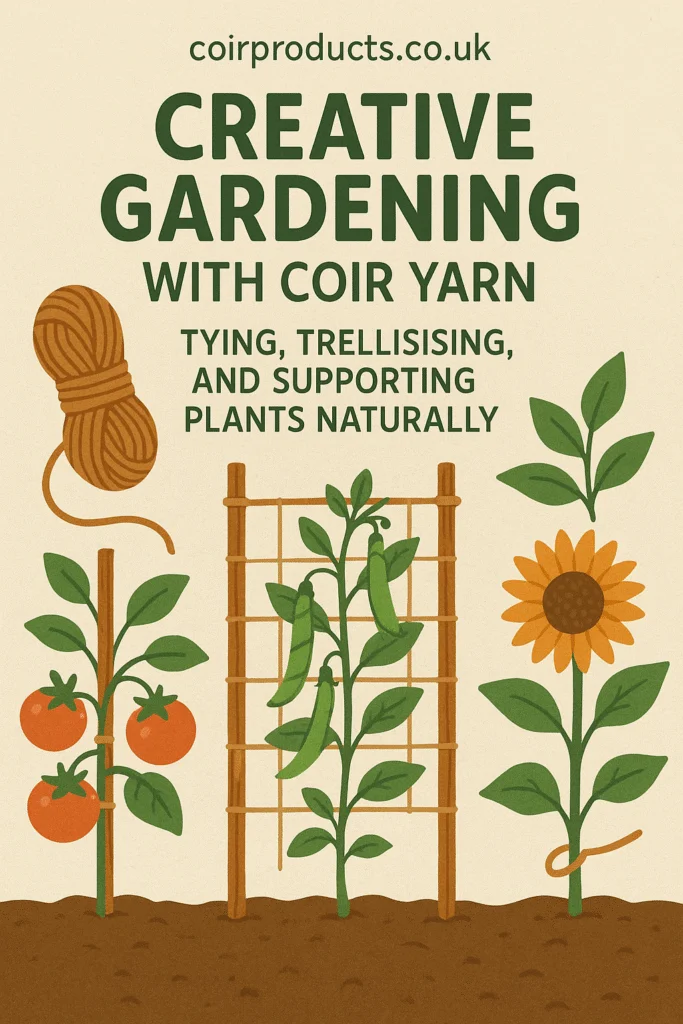
Creative Ways to Use Coir Yarn
1. Tying Plants
Tying plants is essential for guiding growth, preventing damage, and maintaining neat garden beds. Use coir yarn to secure plants to stakes, supports, or trellises.
How to tie plants with coir yarn:
- Cut a length of coir yarn, roughly 30–50 cm depending on the plant size.
- Form a loose loop around the plant stem and stake. Avoid pulling too tight; plants need room to grow.
- Twist the ends of the yarn together to secure it.
Tip: For delicate plants, double the yarn or use a figure-eight knot to reduce friction.
2. Trellising Climbing Plants
Climbing plants like peas, beans, and cucumbers need vertical support. Coir yarn can be used to create simple trellis systems.
DIY coir trellis steps:
- Place two stakes into the ground about 1–2 meters apart.
- Stretch coir yarn horizontally between the stakes, spacing rows 15–20 cm apart.
- For extra stability, weave vertical yarn strands between horizontal rows, creating a grid for plants to climb.
3. Supporting Branches and Heavy Fruits
Fruit-bearing plants or tall flowers may require extra support to prevent breakage. Coir yarn is perfect for creating gentle slings or hammocks to cradle heavy branches.
Example: Tie a loop of coir yarn under a tomato cluster and secure it to a stake. This distributes the weight evenly, preventing stems from snapping.
Case Study: Beginner Garden Success
Sarah, a novice gardener, transformed her small balcony garden using coir yarn. By tying her climbing beans to a lightweight trellis, she increased her yield while keeping plants healthy. Using coir yarn instead of plastic ties made her garden visually appealing and completely sustainable. Within one season, her beans grew stronger, and she noticed reduced plant stress compared to her previous use of nylon twine.
Quick Checklist for Gardening with Coir Yarn
- Select biodegradable coir yarn suitable for plant support.
- Gather stakes, scissors, and clips if needed.
- Plan trellis or support structures before planting.
- Tie plants loosely; allow room for growth.
- Check yarn periodically; replace if it has broken down.
- Experiment with creative patterns, knots, and supports
Disclaimer: This article is provided for general information only and does not constitute engineering, environmental, design, legal, or professional advice. Project-specific advice should always be obtained from suitably qualified professionals.