
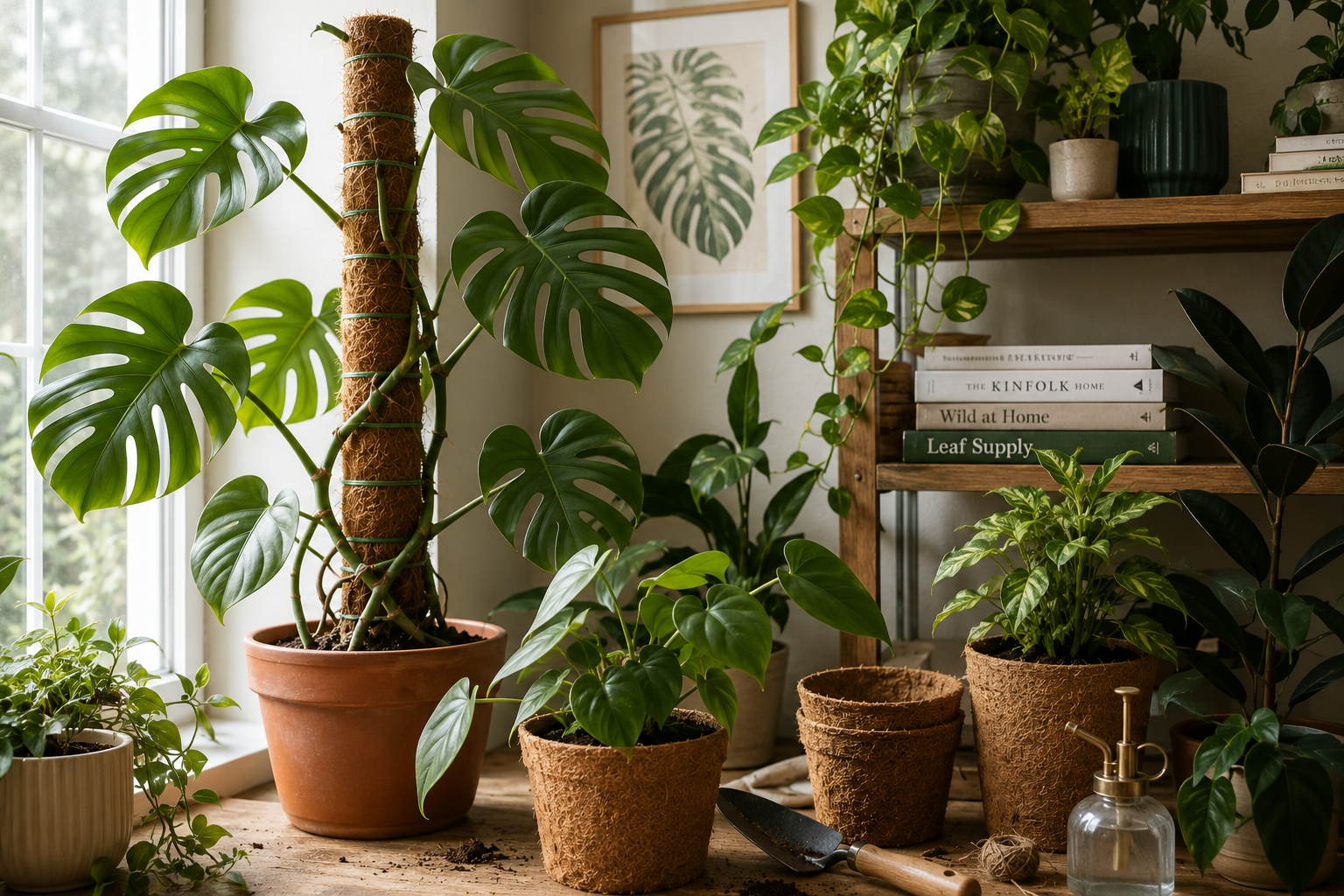
Walk into any garden centre and you’ll find shelves full of houseplant composts, potting mixes, bark blends, perlite, coir and specialist growing media.
For many plant owners, the choice can feel overwhelming.
Should you buy houseplant compost?
Do Monsteras need something different from Peace Lilies?
Why does one plant seem to thrive whilst another struggles despite receiving exactly the same care?
The answer often lies beneath the surface.
Whilst we tend to focus on leaves, flowers and growth, the health of any houseplant begins with its roots. And the environment surrounding those roots plays a significant role in determining whether a plant flourishes or merely survives.
If you’ve ever wondered why some houseplants seem happy for years whilst others decline after only a few months, understanding your growing medium is one of the best places to start.
First Things First: Most Houseplants Don’t Actually Grow in Soil
This surprises many people.
When gardeners talk about “houseplant soil”, they’re usually referring to a potting mix rather than true garden soil.
Garden soil is rarely suitable for indoor plants.
When placed in containers it can become:
- Heavy
- Compacted
- Poorly drained
- Difficult for roots to penetrate
Most houseplants prefer a growing medium specifically designed for container growing.
The goal is simple.
Provide roots with access to:
- Water
- Oxygen
- Nutrients
At the same time.
Achieving that balance is far more important than any label printed on a bag.
Why Healthy Roots Matter
Many common houseplant problems begin below the surface long before symptoms appear on the leaves.
Roots are responsible for:
- Water uptake
- Nutrient absorption
- Plant stability
- Growth production
- Disease resilience
When roots are healthy, plants generally look healthy.
When roots struggle, the effects eventually become visible throughout the entire plant.
This is why experienced growers often check the roots first whenever a plant begins showing signs of stress.
The Biggest Mistake Houseplant Owners Make
Ask experienced plant enthusiasts what kills more houseplants than anything else and many will give the same answer:
Overwatering.
Contrary to popular belief, roots do not simply need water.
They also need oxygen.
When growing media remain permanently wet, air spaces disappear and roots begin to suffocate.
This often leads to:
- Yellow leaves
- Wilting
- Root rot
- Fungus gnats
- Slow growth
- Leaf drop
Ironically, many owners respond by watering even more.
Understanding moisture management is often more important than understanding fertilisers.
What Makes a Good Houseplant Growing Medium?
Different plants have different preferences, but most successful houseplant mixes share several characteristics.
Good Moisture Retention
Plants need access to water between watering sessions.
A good growing medium should retain moisture without becoming waterlogged.
Good Drainage
Excess water should be able to move away from the root zone.
Airflow Around Roots
Healthy roots require oxygen.
A well-structured growing medium creates tiny air pockets throughout the pot.
Resistance to Compaction
Over time, some growing media collapse and become dense.
This can restrict root growth and reduce airflow.
A good potting mix maintains its structure for longer.
Why Coir Has Become Popular for Houseplants
Over the past decade, coir has become increasingly popular amongst indoor plant enthusiasts.
Produced from coconut husk fibre, coir offers a combination of moisture retention and aeration that many houseplants appreciate.
Unlike some traditional growing media, coir tends to maintain an open structure around roots whilst still holding moisture.
Many growers find this particularly useful for plants such as:
- Monstera deliciosa
- Philodendrons
- Pothos
- Peace Lilies
- Syngoniums
- Alocasias
- Ficus
The objective is not to keep roots wet.
The objective is to create a stable environment where roots can access both moisture and oxygen.
Choosing the Right Growing Medium for Different Houseplants
Not every plant has identical requirements.
Monstera
Monsteras naturally climb trees in tropical forests.
They appreciate a growing medium that retains moisture whilst still allowing airflow around the roots.
Philodendrons
Most Philodendrons prefer similar conditions to Monsteras, with a balance of moisture retention and aeration.
Peace Lilies
Peace Lilies enjoy consistent moisture but dislike sitting in saturated conditions.
Snake Plants
Snake Plants prefer drying out between waterings and are generally more tolerant of neglect than excess moisture.
Pothos
One of the most forgiving houseplants, although healthy roots still benefit from a well-structured growing medium.
Houseplants and Root Space
Roots need room to grow.
A surprisingly common mistake is either:
- Keeping plants in pots that are too small
- Moving plants into pots that are far too large
Both can create problems.
Generally speaking, gradual increases in pot size tend to produce healthier growth than dramatic jumps into oversized containers.
Repotting: When Is It Time?
Most houseplants eventually outgrow their containers.
Common signs include:
- Roots emerging from drainage holes
- Water running straight through the pot
- Reduced growth
- Frequent drying out
- Visible root congestion
Repotting provides an opportunity to refresh the growing medium and improve root conditions.
The Benefits of Coir Pots During Repotting
Repotting inevitably causes some root disturbance.
For younger plants, coir pots can help reduce transplant shock by allowing plants to be moved with minimal root disruption.
Many gardeners use coir pots when propagating cuttings, growing seedlings indoors or raising young houseplants before moving them into larger decorative containers.
Supporting Climbing Houseplants
Some of today’s most popular houseplants naturally climb.
Without support, they often become sprawling and untidy.
Plants that commonly benefit from support include:
- Monstera
- Pothos
- Philodendrons
- Syngoniums
Coir grow poles provide a natural climbing surface whilst encouraging aerial roots to anchor and develop as they would in nature.
Many indoor plant enthusiasts find that plants become fuller, stronger and more impressive once provided with vertical support.
Common Signs Your Houseplant Mix Needs Replacing
Even the best growing medium does not last forever.
Watch for:
- Persistent waterlogging
- Compaction
- Poor drainage
- Reduced growth
- Unpleasant smells
- Fungus gnat infestations
Refreshing the growing medium can often revitalise a struggling plant.
Frequently Asked Questions
Can I Use Garden Soil for Houseplants?
Generally, no.
Garden soil often becomes compacted inside containers and can lead to drainage problems.
How Often Should I Change Houseplant Compost?
Most houseplants benefit from fresh growing media every one to three years, depending on the species and growing conditions.
Is Coir Good for Indoor Plants?
Many houseplant owners use coir because of its ability to balance moisture retention with airflow around roots.
Why Does My Houseplant Stay Wet for So Long?
The issue may be the growing medium, pot size, drainage, temperature or watering frequency.
Final Thoughts
Healthy houseplants do not begin with fertilisers, decorative pots or expensive accessories.
They begin with healthy roots.
The right growing medium creates the foundation upon which every leaf, flower and new shoot depends.
Whether you’re caring for a mature Monstera, a treasured Peace Lily or your very first houseplant, understanding what happens beneath the surface will almost always make you a better grower.
Because when roots thrive, plants usually do too.
 Share:

Leave a Reply