
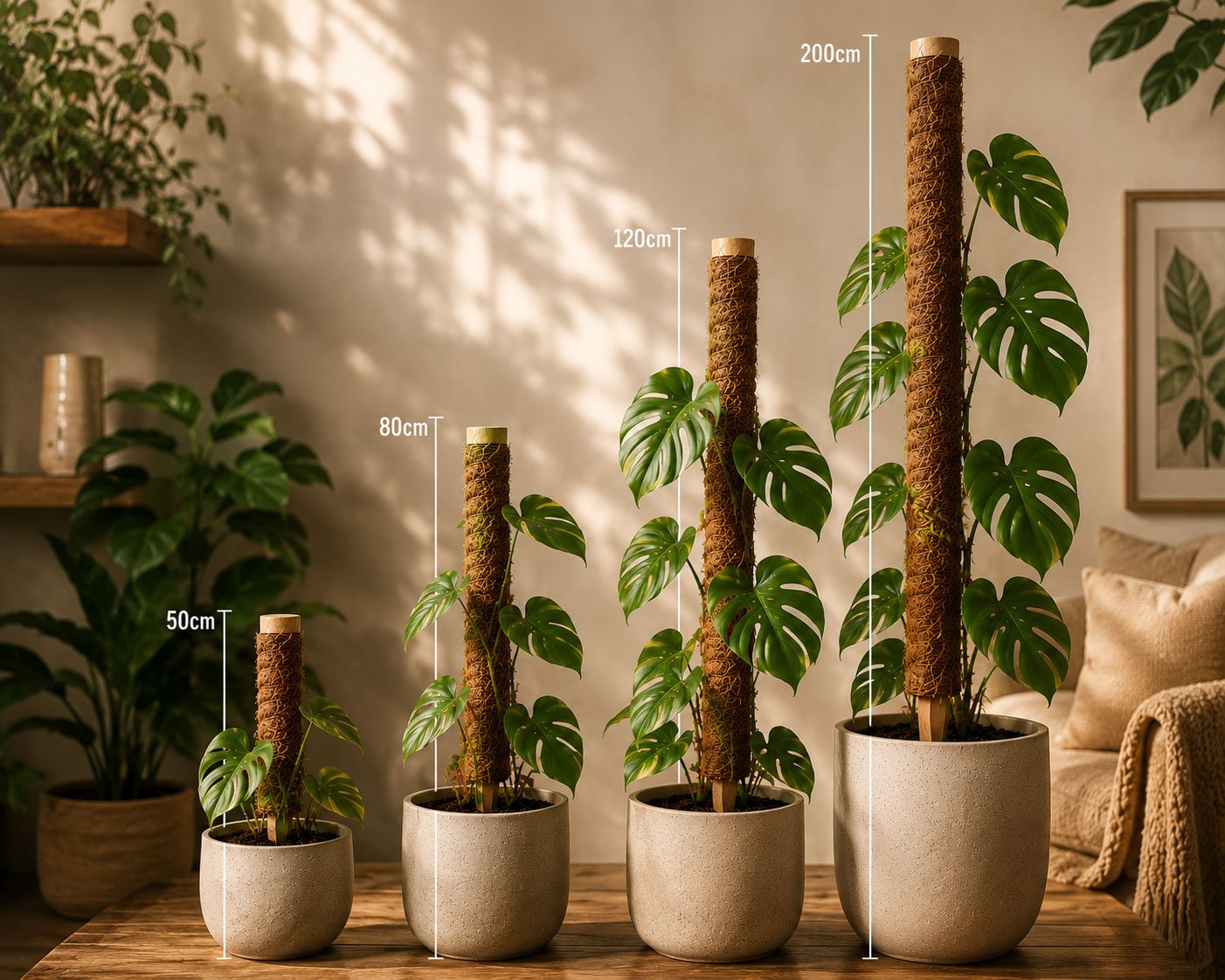
Indoor plants have become a firm favourite in British homes, bringing colour, texture and a sense of calm to living spaces. However, many popular houseplants are natural climbers, and without proper support they can quickly become untidy, leggy or even damaged.
A quality grow pole provides the structure these plants naturally seek, encouraging healthier growth, larger leaves and stronger stems. Whether you’re caring for a Monstera, Philodendron or Pothos, understanding how and when to use a grow pole can make a remarkable difference to your plants.
Why do some plants need a growpole (moss pole)?
Many tropical houseplants grow beneath the rainforest canopy, where they naturally climb trees in search of light. As they climb, they produce larger leaves, stronger stems and healthier aerial roots.
When these same plants are grown indoors without support, they often trail across shelves or droop over the sides of pots. Whilst this may suit some varieties, climbing species generally perform far better when given something sturdy to grow against.
A coir grow pole recreates this natural environment, allowing plants to grow upwards rather than outwards.
Coir grow pole or moss pole – what’s the difference?
Although the terms are often used interchangeably, there are some important differences.
Traditional moss poles are usually filled or wrapped with sphagnum moss, which requires regular watering to remain moist. Whilst effective, they can be messy, expensive and require more maintenance.
Coir grow poles, on the other hand, are crafted from natural coconut fibre. They provide excellent grip for aerial roots whilst remaining durable, tidy and environmentally responsible. Coir also retains enough moisture to encourage healthy attachment without becoming saturated or difficult to maintain.
For many indoor gardeners, a coir grow pole offers a more practical, sustainable and longer-lasting solution.
Which plants benefit most from a growpole?
Many of the UK’s most popular houseplants naturally thrive with vertical support.
Some of the best climbing plants for a grow pole include:
- Monstera deliciosa
- Monstera adansonii
- Philodendron Brasil
- Philodendron Pink Princess
- Philodendron Micans
- Pothos (Devil’s Ivy)
- Epipremnum Aureum
- Scindapsus pictus
- Syngonium
- Rhaphidophora tetrasperma
- Cebu Blue Pothos
- Satin Pothos
- Dragon Tail Plant
- Vanilla Orchid
- Climbing Anthuriums
- Swiss Cheese Vine
- Hoya varieties
- Climbing Ficus
- Arrowhead Vine
- Money Plant
Many of these species will reward you with noticeably larger foliage and stronger growth once they begin climbing naturally.
How to install a grow pole
Installing a grow pole is straightforward and can usually be completed in just a few minutes.
Begin by placing the pole securely into the pot, positioning it close to the main stem while taking care not to damage the root system. Gently guide the stems towards the pole and secure them loosely using soft plant ties or garden twine.
Avoid fastening the stems too tightly, as they will naturally thicken as the plant grows.
Over time, aerial roots will begin attaching themselves to the coir fibres, allowing the plant to support itself naturally.
Common mistakes to avoid
One of the most common mistakes is waiting too long before introducing a grow pole. Younger plants adapt far more easily than mature specimens that have already developed long trailing stems.
Another mistake is choosing a pole that’s too short. Selecting a taller pole from the outset allows your plant to continue growing without needing frequent replacement.
Finally, avoid tying every stem tightly into position. Plants should be encouraged to climb rather than forced into place.
Should you water the grow pole?
Unlike traditional moss poles, coir grow poles do not require constant soaking.
Simply continue watering your plant as normal, ensuring the compost remains suitable for the species you’re growing. If you wish to encourage aerial roots to attach more quickly, lightly misting the coir surface occasionally can be beneficial, particularly during warmer months or in centrally heated homes.
Why choose a coir grow pole?
Coir has become one of the most popular natural materials used in modern gardening, and for good reason.
A quality coir grow pole offers several advantages:
- Crafted from natural coconut fibre
- Provides excellent support for aerial roots
- Encourages upright, healthier growth
- Durable and long-lasting
- Naturally biodegradable
- Cleaner and easier to maintain than moss-filled poles
- Suitable for a wide range of indoor climbing plants
For gardeners looking for a sustainable alternative to plastic supports, coir remains an excellent choice.
Helping your plants reach their full potential
Supporting climbing houseplants isn’t simply about appearance. By recreating the way these plants grow in nature, you’re helping them develop stronger stems, healthier foliage and a more vigorous root system.
Whether you’re nurturing your very first Monstera or expanding an established indoor jungle, investing in a quality coir grow pole is one of the simplest ways to encourage healthier, more natural growth.
At Coir Products, our natural coir grow poles are crafted to provide reliable support whilst complementing the beauty of your indoor plants. Designed with sustainability in mind, they’re suitable for beginners and experienced plant enthusiasts alike.
If you’re looking to help your climbing houseplants thrive, explore our range of coir grow poles and give your plants the support they were designed to enjoy.
 Share:

Leave a Reply