
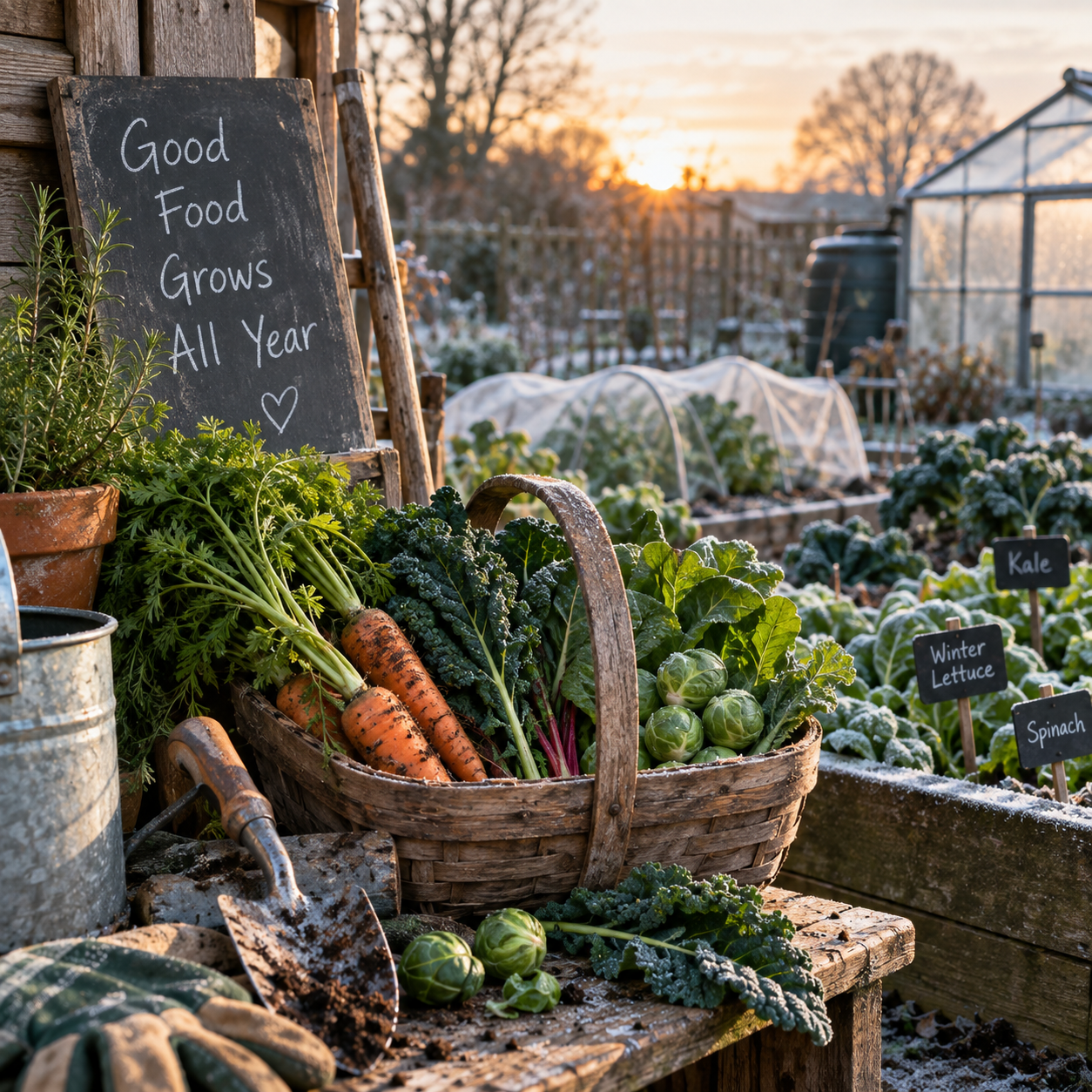
For many gardeners, the first yellowing leaves of September seem to signal the end of the growing year.
The tomatoes are slowing down, courgettes are becoming less enthusiastic and the evenings suddenly arrive rather earlier than one would like. It is tempting to tidy the greenhouse, put away the seed packets and declare the vegetable garden closed until spring.
But the British growing season doesn’t end when summer does.
With the right crops, a little protection and sensible expectations, you can continue growing and harvesting vegetables throughout autumn and well into winter in the UK.
Admittedly, you won’t be producing baskets of tomatoes in December without considerable intervention. Winter growing is a different sort of gardening: slower, quieter and rather more dependent upon choosing plants that actually appreciate cooler conditions.
What can you grow during autumn?
Early autumn is one of the most useful periods for extending the vegetable-growing year.
The soil still retains some warmth from summer, yet cooler temperatures suit a number of leafy crops particularly well.
Spinach, rocket, winter lettuce, pak choi, mustard greens, radishes and spring onions are all worth considering. Depending upon your location and growing conditions, some can be sown during September and into early autumn.
You can also plant crops intended for harvesting much later.
Garlic and overwintering onions, for example, can establish themselves during the cooler months before putting on stronger growth when spring returns.
Broad beans can also be autumn-sown in suitable conditions using varieties intended for overwintering.
The important thing is not to garden as though it were still June. Autumn growing is about choosing the season rather than fighting it.
What vegetables can survive winter in the UK?
Some vegetables are remarkably tolerant of cold weather once properly established.
Kale is perhaps the classic example. Leeks, Brussels sprouts, parsnips and certain cabbages can also remain productive during colder periods, depending upon the variety and local conditions.
Hardy spinach and winter salads can continue providing leaves, particularly when given some protection.
There is an important distinction, however, between a plant surviving winter and actively growing throughout it.
As temperatures fall and daylight becomes limited, growth can slow considerably. A vegetable may sit quite happily in the ground for weeks without appearing to do very much at all.
That isn’t necessarily a problem.
Winter gardening requires a little patience.
A greenhouse can extend the season considerably
You don’t need a heated greenhouse to make autumn and winter growing worthwhile.
An unheated greenhouse, cold frame or polytunnel can provide valuable protection from wind, heavy rain and the worst of the weather.
Leafy crops are particularly useful under cover. Spinach, rocket and winter salad leaves can provide smaller but welcome harvests when the outdoor garden is considerably quieter.
The same principle works on a smaller scale.
A sheltered patio, balcony or sunny position beside the house can provide a useful growing space for containers. GrowBags can also make it possible to create a contained growing area where permanent vegetable beds aren’t available.
Explore CoirProducts® GrowBags Coir Growbags | Peat -Free Sustainable Garden Planting Bags
Containers still need attention in winter
One of the easiest mistakes is assuming that plants no longer need checking once summer watering has finished.
Containers behave differently from open ground.
They contain a relatively small volume of growing medium and are more exposed to fluctuations in temperature. They can become very wet during prolonged rainfall, yet pots kept under cover may actually become surprisingly dry.
Check them rather than relying upon the calendar.
Good drainage is particularly important during the colder months. Roots sitting for long periods in saturated growing medium are unlikely to thank you for the experience.
Choosing a growing medium for autumn crops
Healthy winter growth still begins around the roots.
For container-grown vegetables, you want a growing medium capable of holding useful moisture whilst maintaining a good structure around the root zone.
Coir-based growing media can be particularly useful for container growing because of their balance between moisture retention and aeration.
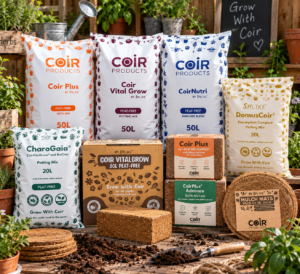
At CoirProducts®, we offer several formulations depending upon how you prefer to grow. Coir Vital Grow® provides a versatile Coir Potting Mix, whilst Coir Plus® includes added fast-release NPK nutrition. CoirPlus® Advance is designed with slow-release nutrition for longer-term growing.
If you’re unsure which is appropriate, our guide “Which coir growing medium should I choose?” explains the differences across the range.
Read our guide to choosing a coir growing medium CoirPlus Advance – Coir Compost with Slow-Release Fertiliser
Protect the roots as temperatures fall
Plants growing in the ground benefit from the insulating effect of the surrounding soil. Containers are considerably more exposed.
Moving vulnerable pots into a sheltered position can help as temperatures fall. Raising containers slightly can also improve drainage during prolonged wet weather.
Mulching is another useful autumn job.
A layer of suitable mulch over the soil surface helps moderate changes in conditions around the root zone. For pots and individual plants, CoirProducts® Coir Mulch Mats provide a simple way of creating a protective covering without using loose mulch.
Explore CoirProducts® Coir Mulch Mats Coir Mulch Mats | Weed Control Mats
We’ve covered this in more detail in our guide to protecting plant roots before winter.
Don’t forget to harvest
Winter vegetable growing isn’t solely about sowing something new.
Much of the pleasure comes from extending crops that are already established.
Keep harvesting suitable leafy vegetables rather than allowing usable leaves to deteriorate. Pick leeks as required. Harvest root crops according to their variety and conditions, and make use of herbs that remain productive.
Even a modest harvest can feel surprisingly rewarding on a cold November afternoon.
There is something rather satisfying about walking into an apparently dormant garden and returning to the kitchen with something for supper.
Start now rather than waiting for winter
If you want vegetables during winter, the preparation usually begins before winter arrives.
Plants need time to germinate and establish themselves while there is still reasonable warmth and daylight. Waiting until December to begin thinking about winter vegetables rather limits one’s options.
September and early autumn are therefore valuable.
Sow suitable crops, tidy growing areas, prepare containers, check the greenhouse and decide which existing plants are worth protecting.
A little preparation now can keep the garden productive for considerably longer.
So, can you really grow vegetables all winter?
Yes, but perhaps not in quite the way we think about summer growing.
British winter gardening is less about abundance and more about continuity.
Some crops will remain in the ground until required. Others will grow slowly under cover. A few hardy vegetables will tolerate remarkably unpleasant weather, while autumn-sown crops quietly establish themselves in preparation for spring.
You don’t need an enormous vegetable garden either. A few containers, a GrowBag, a cold frame or a small greenhouse can be enough to keep something growing.
After more than 11 years supplying coir growing products in the UK, one thing we have learnt at CoirProducts® is that gardeners rarely stop thinking about what comes next.
And perhaps that is the nicest thing about autumn.
The summer harvest may be drawing to a close, but the growing year certainly isn’t.
 Share:

Leave a Reply