
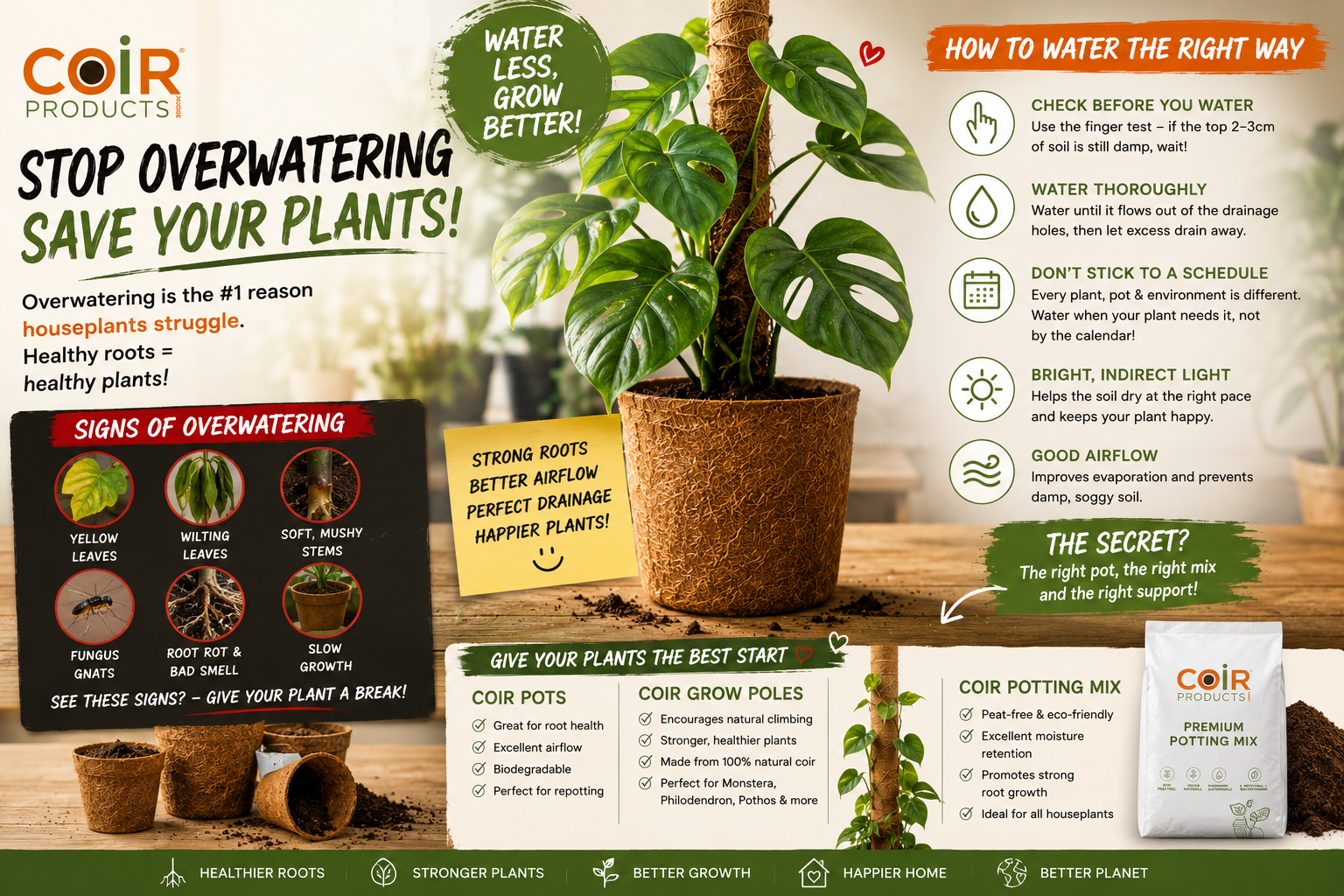
If there is one mistake responsible for more struggling houseplants than almost any other, it is overwatering.
Many plant owners assume a drooping leaf means their plant needs more water. A yellowing leaf? More water. Slow growth? More water.
Unfortunately, this often makes the problem worse.
Across homes throughout the UK, countless houseplants suffer not from neglect, but from too much care.
The good news is that overwatering is both preventable and reversible when caught early.
In this guide, we’ll explore how to recognise the signs of overwatering, understand why it happens, and create healthier growing conditions for indoor plants.
Why Overwatering Is Such a Common Problem
Most people understand that plants need water.
What many don’t realise is that roots also need oxygen.
Healthy roots live within tiny air spaces throughout the growing medium. When these spaces become saturated for extended periods, oxygen levels fall and roots begin to struggle.
Over time, this can lead to:
- Root rot
- Yellowing leaves
- Wilting foliage
- Slow growth
- Fungal problems
- Plant decline
Ironically, many symptoms of overwatering resemble symptoms of underwatering, causing owners to water even more.
The Hidden Role of Roots
Most houseplant problems begin below the surface.
While leaves attract most of our attention, roots are responsible for:
- Water absorption
- Nutrient uptake
- Plant stability
- Disease resistance
- Healthy growth
When roots remain constantly wet, they become vulnerable to damage and decay.
Once root health declines, the entire plant begins to suffer.
This is why successful houseplant care starts with creating a healthy root environment.
Signs Your Houseplant Is Being Overwatered
Learning to identify overwatering early can save a plant before serious damage occurs.
Common warning signs include:
Yellow Leaves
One of the earliest indicators.
Leaves may gradually turn pale yellow before dropping.
Soft Stems
Healthy stems should feel firm.
Excess moisture can cause stems to become soft or mushy.
Wilting Despite Wet Soil
This often confuses plant owners.
A plant may appear thirsty whilst its roots are actually drowning.
Fungus Gnats
Small flying insects are frequently attracted to consistently wet growing media.
Brown Leaf Edges
Root stress often shows itself through leaf damage.
Slow Growth
Overwatered plants frequently stop producing healthy new growth.
Musty Smell
A sour or unpleasant smell around the pot can indicate root problems.
Why Root Rot Happens
Root rot occurs when roots remain wet for prolonged periods.
Fungal organisms naturally present within growing media begin attacking weakened roots.
Symptoms include:
- Black roots
- Brown roots
- Soft roots
- Bad odours
- Severe wilting
Healthy roots should generally appear white or cream coloured and feel firm.
Once root rot becomes advanced, recovery becomes much more difficult.
Prevention is always better than cure.
How Often Should You Water Houseplants?
One of the most common questions gardeners ask is:
“How often should I water my houseplants?”
The honest answer is that there is no universal schedule.
Water requirements vary depending on:
- Plant species
- Pot size
- Room temperature
- Humidity levels
- Light exposure
- Season
- Growing medium
A Monstera growing beside a sunny south-facing window will have very different requirements from a Snake Plant positioned in a shaded hallway.
Instead of following a calendar, learn to assess the growing medium itself.
The Finger Test
A simple technique used by experienced growers is the finger test.
Insert your finger a few centimetres into the growing medium.
If it still feels damp, watering can usually wait.
If it feels dry below the surface, watering may be required.
This simple habit can dramatically reduce overwatering problems.
Choosing the Right Pot Matters
The container plays a significant role in moisture management.
Pots without drainage holes often trap excess water around roots.
Good drainage allows surplus water to leave the pot, helping maintain healthier root conditions.
Coir pots can be particularly useful during propagation and repotting because they provide good airflow whilst reducing root disturbance when moving plants into larger containers.
Why Growing Media Makes a Difference
Many houseplant problems originate from unsuitable growing media.
Some mixes become heavily compacted over time.
Compacted growing media often:
- Holds excessive moisture
- Restricts airflow
- Limits root development
- Increases root rot risk
The ideal growing medium should balance:
- Moisture retention
- Drainage
- Aeration
- Root support
How Coir Helps Prevent Overwatering Problems
Coir has become increasingly popular amongst houseplant enthusiasts because of its unique structure.
Produced from coconut husk fibres, coir provides a growing environment capable of holding moisture whilst maintaining air spaces around roots.
Benefits include:
Better Root Aeration
Roots can access oxygen more easily.
Improved Moisture Balance
Water remains available without creating permanently saturated conditions.
Reduced Compaction
Coir maintains a more open structure than many traditional growing media.
Easier Rewetting
Unlike some potting mixes, coir is easier to rehydrate after drying.
For houseplants such as Monstera, Pothos, Philodendrons, Alocasias and Peace Lilies, maintaining this balance between moisture and airflow is particularly important.
Supporting Climbing Houseplants
Many popular indoor plants naturally climb in their native environments.
Examples include:
- Monstera deliciosa
- Pothos
- Philodendrons
- Syngoniums
Providing vertical support can encourage healthier growth and larger foliage.
Coir grow poles are commonly used to support climbing houseplants whilst helping aerial roots establish naturally as plants mature.
Many growers find that plants become stronger and more vigorous when given appropriate climbing structures.
How to Rescue an Overwatered Houseplant
If overwatering is suspected, quick action can help.
Stop Watering Immediately
Allow the growing medium time to dry.
Check Root Health
Carefully inspect roots if the plant can be removed safely.
Remove Damaged Roots
Trim soft, black or rotting roots using clean tools.
Repot if Necessary
Fresh, well-structured growing media may help recovery.
Improve Drainage
Ensure water can escape freely from the container.
Increase Airflow
Better ventilation can help excess moisture evaporate.
Recovery may take several weeks depending on the severity of the damage.
Common Houseplants Most Vulnerable to Overwatering
Certain plants are particularly sensitive.
These include:
- Snake Plants
- ZZ Plants
- Aloe Vera
- Jade Plants
- Cacti
- Succulents
These species generally prefer drying out slightly between waterings.
Final Thoughts
Successful houseplant care is not about watering more.
It is about watering wisely.
Healthy plants depend upon healthy roots, and healthy roots require a balance of both moisture and oxygen.
By understanding the signs of overwatering, choosing suitable containers, selecting well-structured growing media and allowing roots access to air, houseplant owners can avoid one of the most common causes of plant failure.
Whether you are caring for a Monstera, a Peace Lily, a Pothos or a collection of indoor plants, the principle remains the same:
Strong roots create healthy plants.
And healthy plants begin beneath the surface.
 Share:


Leave a Reply