
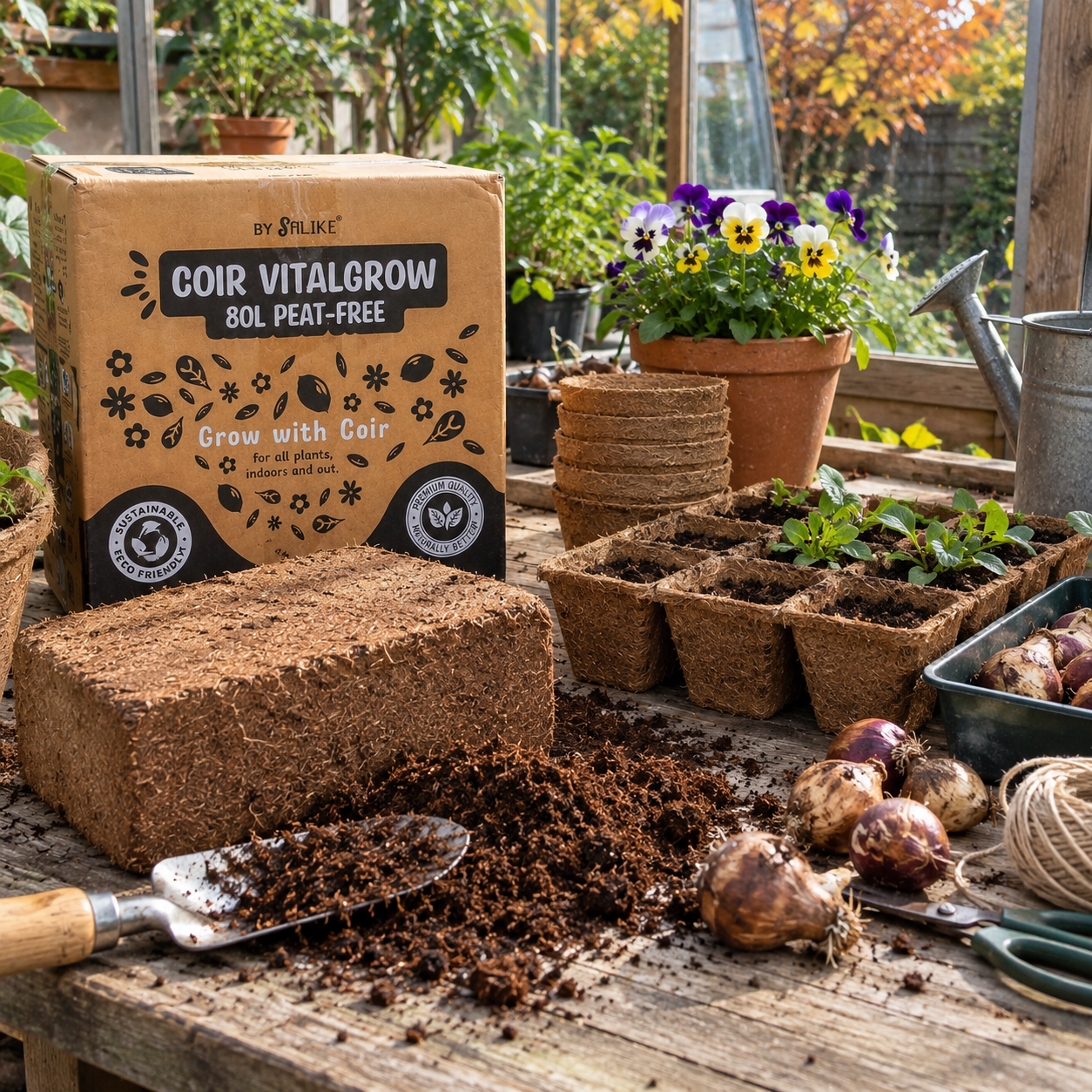
There is a point in October when the garden suddenly feels different.
The mornings are cooler. The light disappears earlier. Containers that seemed to need watering constantly a few weeks ago remain damp for days. Leaves begin gathering in corners almost as quickly as you clear them.
It can feel as though the gardening year is winding down.
It isn’t.
October is actually one of the most useful months for getting ahead. A few jobs now can protect what you’ve grown, give new plants time to establish and leave the garden in considerably better shape when spring arrives.
So, rather than putting everything away for winter, here are ten October garden jobs genuinely worth doing.
1. Give your containers a proper check
Start with the pots you have walked past all summer.
By October, some will contain plants that have finished for the year. Others may still be going surprisingly well.
Remove dead or badly damaged growth, check drainage holes aren’t blocked and look at the condition of the growing medium.
Most importantly, reconsider the watering routine.
Cooler temperatures and shorter days generally mean containers lose moisture more slowly. Continuing with a midsummer watering routine can leave pots unnecessarily wet.
Don’t water simply because it is watering day.
Check first.
A finger beneath the surface and a quick lift of the pot can tell you considerably more than the calendar.
2. Bring the tender ones in
If you have plants that won’t appreciate the first proper cold spell, now is the time to decide where they are going.
That might be a greenhouse, conservatory, porch, windowsill or another sheltered position.
Don’t wait until frost is forecast for that evening and then find yourself carrying twelve pots through the house at nine o’clock.
Before bringing outdoor pots inside, give them a quick inspection. Remove dead foliage and check the leaves, stems and compost surface for unwanted passengers.
A few minutes outside can save considerable irritation indoors.
3. Keep planting
October isn’t only about clearing things away.
It is an excellent time to continue planting in many UK gardens, particularly while the soil remains workable.
Spring-flowering bulbs can go in, along with suitable hardy plants, shrubs and other autumn additions.
The cooler conditions can be useful for establishment because plants are not dealing with the heat and rapid moisture loss associated with summer.
And there is something rather satisfying about planting something now knowing that the real reward won’t arrive until months later.
Gardening has always required a little faith in what comes next.
4. Don’t forget the greenhouse
After a busy growing season, greenhouses have an impressive ability to accumulate empty pots, labels, string, forgotten tools and plants that should probably have been removed three weeks ago.
October is a good opportunity for a reset.
Clear finished crops and old plant material. Wash reusable pots and trays. Clean surfaces. Check for damaged panes or draughts that need attention before winter.
If you are continuing to grow through autumn and winter, make sure plants still have adequate ventilation.
A greenhouse doesn’t need to become hermetically sealed simply because the weather has cooled.
5. Start thinking about roots, not just leaves
Much of gardening happens where we can’t see it.
A plant may look quiet above ground while considerable activity continues beneath the surface.
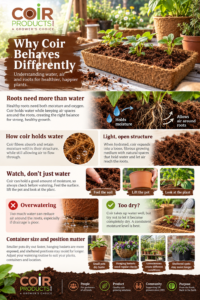
Roots need access to moisture, air and an appropriate growing environment. This is one reason we talk so much about the physical structure of coir at CoirProducts®.
A good growing medium isn’t merely something that fills a pot.
It is the environment in which the root system has to live.
When repotting, propagating or preparing containers for future planting, avoid unnecessarily compacting the growing medium. You want good contact around the roots without squeezing every available air space from the pot.
Healthy growth starts below the surface.
6. Give hanging baskets some attention
Hanging baskets shouldn’t disappear from the gardening calendar simply because summer has ended.
Some gardeners will clear theirs completely. Others replace summer displays with autumn and winter planting.
Either way, inspect the basket itself and its liner.
After months exposed to sun, wind, rain and watering, liners can become tired or damaged. Replacing them now gives you a clean starting point if you are creating an autumn display.
If you are keeping existing plants going, remember that hanging baskets are exposed differently from ordinary pots. Wind and position can affect how quickly they dry, even in cooler weather.
Check them individually rather than assuming every container needs the same treatment.
7. Protect the soil you’ve worked on
Bare soil doesn’t necessarily need to remain bare throughout winter.
Depending on what and where you are growing, autumn can be a useful time to think about protecting the soil surface and preparing beds and containers for the months ahead.
Mulching can help moderate conditions at the surface and reduce unnecessary disturbance.
Around established plants, CoirProducts® Mulch Mats can also provide a simple way of covering the soil immediately around the plant while still allowing water to reach the root area.
It is a small job, but October is full of small jobs that make spring easier.
8. Make something from the leaves
Autumn leaves can be inconvenient when they’re blocking paths, smothering small plants or turning wet paving into a skating rink.
But they are also useful garden material.
Rather than treating every fallen leaf as rubbish, consider collecting suitable leaves for leaf mould.
A simple pile, suitable container or leaf-filled sack can eventually produce useful organic material for the garden.
It takes patience.
Fortunately, nature isn’t in much of a hurry.
9. Sow something
The growing year does not have to stop because summer has.
What you can sow successfully will depend on your location, available protection and growing conditions, but October can still offer opportunities for herbs, salads, hardy crops and propagation.
A windowsill, greenhouse or protected growing space can considerably extend what is possible.
Our coir propagation pots, trays and Coir Coins are particularly useful when you only want to start a few plants rather than filling large containers.
There is also something psychologically useful about sowing in autumn.
While much of the garden is slowing down, you’ve already started something new.
10. Make notes while you still remember
This may be the least glamorous gardening job on the list.
It might also be one of the most valuable.
What grew brilliantly this year?
What struggled?
Which container was in completely the wrong position?
What did you plant far too much of?
What do you wish you’d grown?
And which variety are you absolutely growing again?
Write it down now.
By February, it is remarkably easy to remember the spectacular tomatoes and completely forget the six other things that didn’t work.
A photograph and a few notes on your phone are enough.
Next year’s garden can learn from this year’s.
October isn’t the end
Gardens don’t really have a finishing line.
They change.
The frantic growth of May and June becomes the abundance of summer, which gives way to autumn’s clearing, planting and preparation. Then winter does its quieter work before everything begins again.
At CoirProducts®, we have been part of that cycle with UK growers since 2015.
Over those years we’ve seen coir used on kitchen windowsills and allotments, in greenhouses and hanging baskets, by complete beginners and gardeners who have been growing for decades.
That is the part of gardening we care about most.
People. Product. Community. Purpose.
Not simply what we sell, but what people grow with it.
Because somewhere this October, somebody will press a seed into a pot that looks rather unremarkable today.
A few months from now, it may be the beginning of something quite different.
CoirProducts® A Grower’s Choice.
Supporting UK growers since 2015.
From the Earth, Back to the Earth.
Is this conversation helpful so far?
 Share:


Leave a Reply