
For generations, peat was regarded as the gardener’s trusted companion. It was light, easy to handle and widely used in composts for everything from seed sowing to growing tomatoes. Today, however, the gardening world is undergoing a significant change.
As awareness of environmental issues has grown, gardeners across the United Kingdom have begun moving away from peat-based composts in favour of more sustainable alternatives. Amongst these, coir has emerged as one of the most popular choices.
But is coir genuinely better than traditional peat-free compost? Or does each have its place in the garden?
The answer depends largely on what you’re growing, but for many applications, coir offers an impressive combination of performance, sustainability and ease of use.
What Is Peat?
Peat is partially decomposed organic matter that forms naturally in wetlands over thousands of years. These peatlands are remarkable ecosystems, supporting unique wildlife whilst acting as some of the world’s largest natural carbon stores.
The difficulty is that peat regenerates extremely slowly. Once harvested, it can take centuries for these habitats to recover.
As a result, the horticultural industry has increasingly moved towards peat-free growing media, encouraging gardeners to adopt more environmentally responsible alternatives without compromising plant health.
Why Are Gardeners Switching to Peat-Free Compost?
The shift towards peat-free compost is driven by more than environmental awareness alone.
Modern gardeners increasingly seek products that are:
- Sustainably sourced
- Easy to work with
- Reliable throughout the growing season
- Suitable for vegetables, flowers and houseplants
- Free from unnecessary environmental impact
Fortunately, today’s peat-free growing media perform considerably better than many of the early alternatives, with coir becoming one of the leading ingredients found in premium compost blends.
What Is Coir?
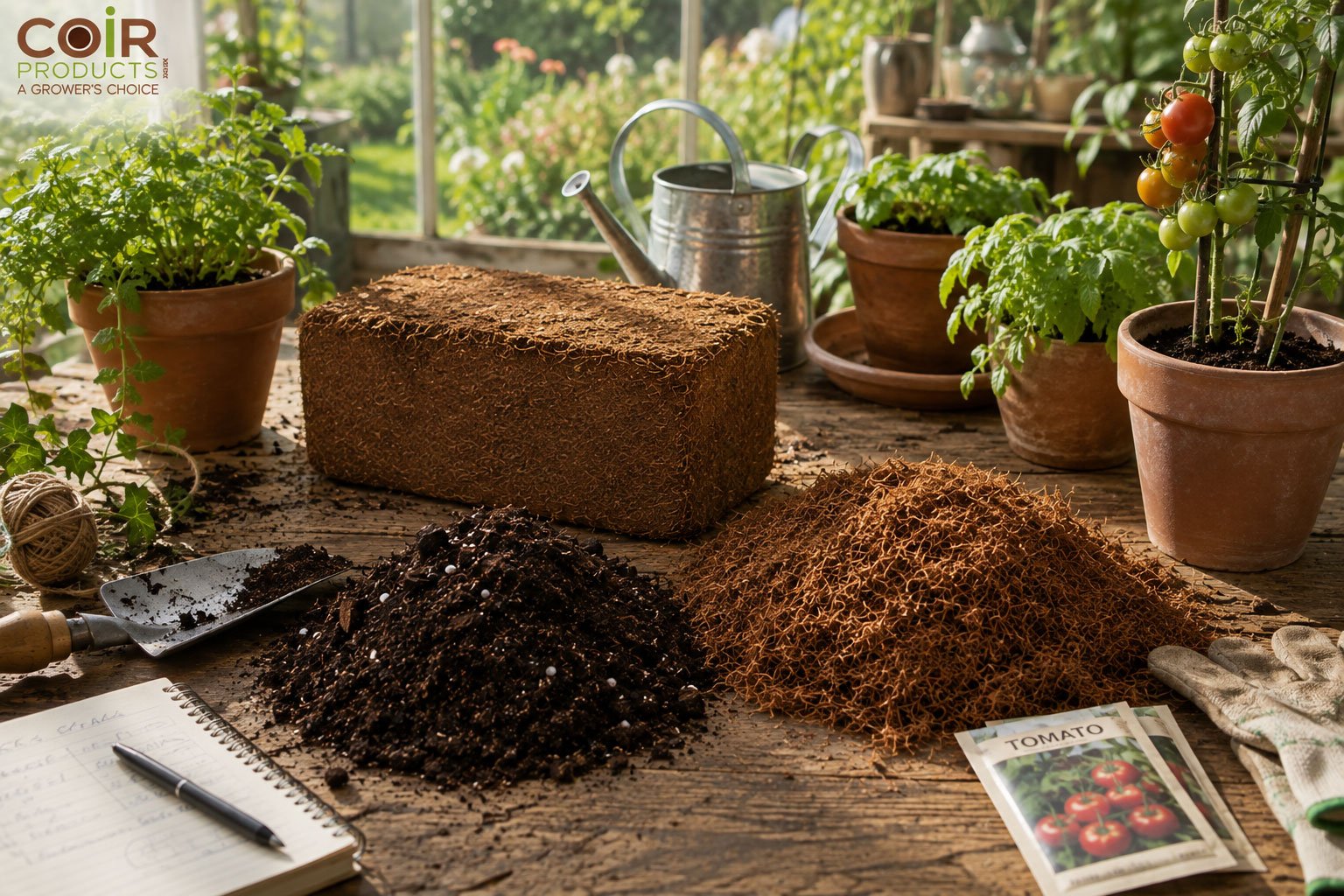
Coir is a natural growing medium produced from the fibrous husk surrounding coconuts. Once regarded as a by-product of the coconut industry, these fibres are carefully processed, washed and compressed into convenient bricks, blocks or loose growing media.
When water is added, compressed coir expands into a light, airy growing medium that is remarkably easy to use.
Products such as Coir Vital Grow, CoirPlus, Coir Nutri and compressed coir bricks provide gardeners with a practical, peat-free solution suitable for a wide range of plants.
Coir vs Traditional Peat-Free Compost
Although both are considered peat-free, there are some important differences.
Many peat-free composts contain a blend of green compost, bark, wood fibre and other organic materials. Whilst these mixes can perform well, their consistency may vary depending upon the ingredients used.
Coir offers a far more uniform structure.
Its naturally open fibres create excellent air spaces around plant roots whilst holding moisture remarkably well. This balance between air and water is one of the principal reasons why so many gardeners choose coir for seed sowing, container gardening and indoor plants.
Excellent Water Retention
One of coir’s greatest strengths is its ability to retain moisture without becoming waterlogged.
The fibres absorb water readily before releasing it gradually to surrounding roots as plants require it. During warmer weather, this helps reduce rapid drying, particularly in pots, containers and hanging baskets.
For busy gardeners, this can often mean less frequent watering whilst maintaining healthier growing conditions.
Healthy Roots Begin with Good Aeration
Roots require oxygen just as much as they require water.
A growing medium that becomes compacted can restrict airflow, slowing root development and increasing the risk of root problems.
Coir’s naturally fibrous structure allows excellent aeration, encouraging roots to spread freely throughout the compost. Strong root systems invariably produce stronger, healthier plants above the surface.
Whether growing vegetables, herbs, flowers or houseplants, healthy roots remain the foundation of successful gardening.
Suitable for Almost Every Garden
One reason coir has become so widely used is its versatility.
It performs exceptionally well for:
- Seed sowing
- Vegetable gardening
- Tomatoes
- Cucumbers
- Chillies
- Herbs
- Hanging baskets
- Patio containers
- Houseplants
- Raised beds
- Greenhouse growing
For gardeners wishing to enrich their existing soil, coir can also be mixed with compost to improve moisture retention and soil structure.
Choosing the Right Coir Product
Different gardening projects benefit from different growing media.
Coir Vital Grow provides a versatile all-purpose growing medium suitable for vegetables, flowers, herbs and container planting.
CoirPlus combines premium coir with added nutrients, making it ideal for gardeners seeking a convenient growing solution straight from hydration.
Coir Nutri offers additional nutritional support during the early stages of plant development, helping young plants establish strong, healthy growth.
For those seeking convenient storage, compressed coir bricks expand dramatically when water is added, producing generous quantities of peat-free growing medium whilst occupying very little storage space.
A Better Choice for Sustainable Gardening
Modern gardening is no longer solely about growing healthy plants. Increasingly, it is also about making thoughtful choices that reduce environmental impact.
By choosing coir, gardeners are selecting a renewable, peat-free growing medium that helps reduce pressure on valuable peatland habitats whilst delivering excellent growing performance.
Combined with its impressive moisture retention, excellent aeration and versatility across a wide range of plants, it is easy to understand why coir has become the preferred growing medium for so many gardeners throughout the UK.
Whether you’re sowing your first seeds of spring, nurturing a collection of cherished houseplants or filling greenhouse containers for the season ahead, coir provides a dependable, sustainable foundation for healthy growth.
If you’re considering making the move to peat-free gardening, explore our range of Coir Vital Grow, CoirPlus, Coir Nutri and compressed coir bricks. Each has been developed to help gardeners grow with confidence whilst embracing a more sustainable way to garden.
Frequently Asked Questions
Is coir better than peat-free compost?
Coir is itself a peat-free growing medium. It offers excellent moisture retention, superb aeration and consistent quality, making it an excellent choice for many gardening applications.
Can vegetables be grown in coir?
Yes. Tomatoes, cucumbers, peppers, herbs, salad crops and many other vegetables perform exceptionally well in quality coir growing media.
Does coir contain nutrients?
Pure coir contains very few nutrients of its own, which is why many gardeners choose enriched products such as CoirPlus or Coir Nutri, or feed plants as they grow.
Is coir environmentally friendly?
Yes. Coir is produced from coconut husks, a renewable by-product that would otherwise go to waste, making it an environmentally responsible alternative to peat.
 Share:

Leave a Reply