
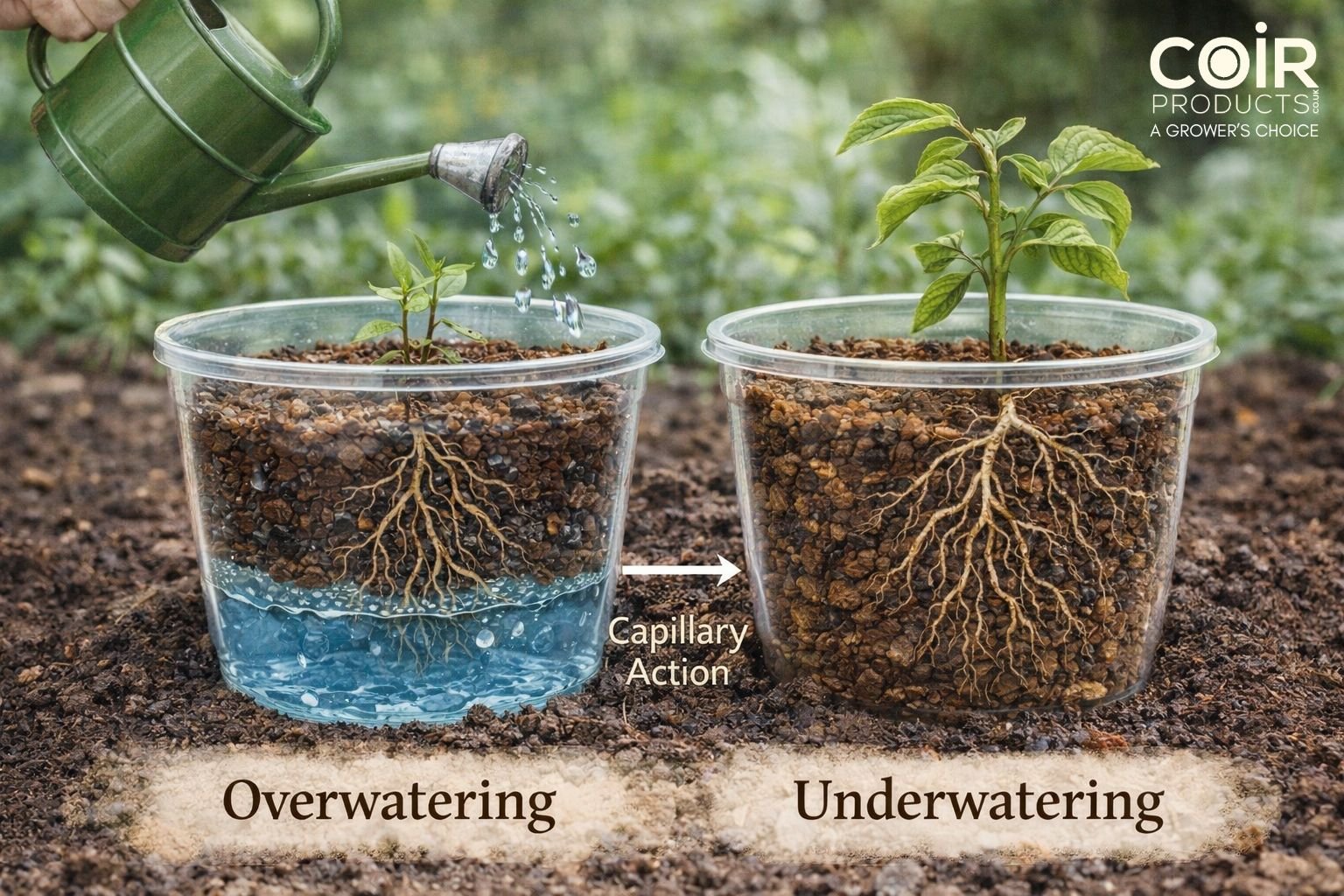
Watering seems simple until plants start failing. Yellowing leaves, stunted growth, root rot, or dry, lifeless soil are often symptoms of one underlying issue: poor water management.
At CoirProducts, we see this time and again. The problem isn’t effort, it’s misunderstanding. Watering isn’t about routine; it’s about balance, structure, and control.
Overwatering vs Underwatering: The Root Impact
Most growers assume more water equals healthier plants. In reality, overwatering is one of the fastest ways to damage roots.
When a growing medium becomes saturated:
- Oxygen is displaced
- Roots cannot respire
- Root rot and disease become likely
On the other hand, underwatering limits nutrient transport and slows growth.
The key difference:
- Overwatering suffocates roots
- Underwatering starves them
Both lead to stress just through different mechanisms.
Drainage vs Retention: Finding the Balance
Effective watering is not about how often you water, it’s about how your growing medium behaves when you do.
- Poor drainage leads to waterlogging
- Poor retention leads to rapid drying
A well-performing substrate strikes a balance:
- Retains enough moisture for plant uptake
- Drains excess water efficiently
This balance is what separates consistent growth from constant guesswork.
Capillary Action: The Invisible Movement of Water
Water doesn’t just sit in your growing medium it moves.
Capillary action is the process by which water travels through small spaces within the substrate, distributing moisture throughout the root zone.
In simple terms:
- Good structure = even water distribution
- Poor structure = dry spots and saturated pockets
This is why two pots watered the same way can behave completely differently. It’s not just watering, it’s how the medium handles it.
The Role of Substrate Structure (and why it matters)
The structure of your growing medium defines everything about water behaviour.
Traditional soil in containers often:
- Compacts over time
- Reduces airflow
- Creates uneven moisture zones
Coir-based substrates are crafted to maintain structure. This means:
- Consistent moisture distribution
- Stable air pockets for root oxygen
- Reduced risk of compaction
The result is a more controlled environment where water supports growth rather than disrupts it.
Seasonal Watering Adjustments
Watering isn’t static; it changes with the environment.
- Warmer months increase evaporation and plant demand
- Cooler conditions slow growth and reduce water needs
- Indoor environments behave differently to outdoor spaces
Ignoring these shifts leads to overwatering in winter and underwatering in peak growth periods.
The best growers don’t follow schedules; they respond to conditions.
A Smarter Approach to Watering
Water management isn’t about doing more, it’s about doing it right.
At CoirProducts, we focus on enabling growers to work with substrates that:
- Maintain balance between air and moisture
- Support consistent root conditions
- Reduce the risk of common watering mistakes
Because when water is managed correctly, plants don’t just survive, they perform.
 Share:

Leave a Reply