
Types of Coir Products
Learning Objectives:
- Identify the different forms of coir used in gardening and growing
- Understand the properties and ideal use cases for each format
- Choose the right product based on gardening goals and environments
Introduction to Coir Product Forms
Coir comes in a range of formats not because it’s complicated, but because gardening is diverse. The plant you grow, the space you have, and your goals (e.g., starting seeds vs maintaining a large planter) all determine which coir product works best.
These formats have been designed for versatility, sustainability, and ease of use especially for beginners, families, schools, and even large-scale growers.
Product Profiles: In Detail
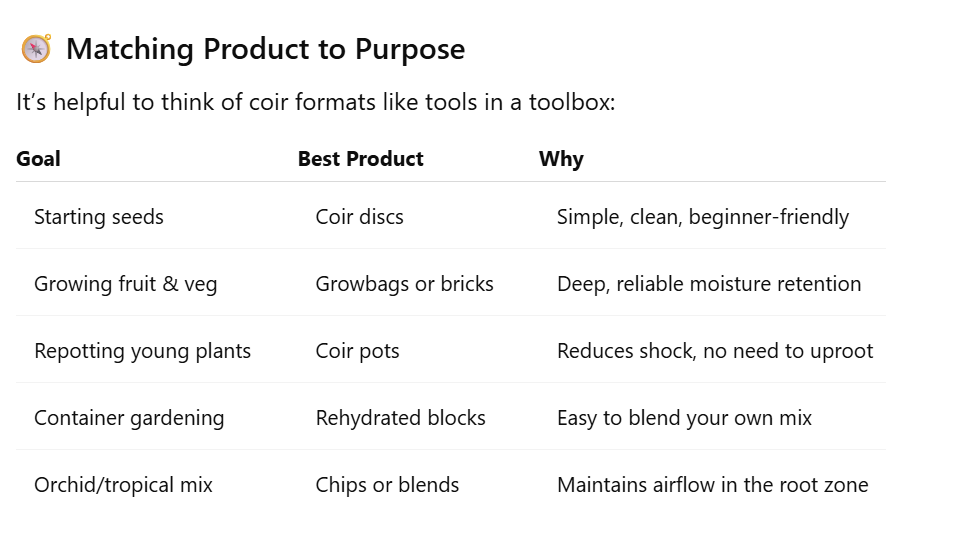
1. Coir Blocks & Bricks
- What They Are: Compressed blocks of coir pith, typically 650g to 5kg in weight.
- Use Case: Ideal for rehydration and mixing with compost or feeds. Often used in pots, beds, or planters.
- Benefits:
- Expand significantly when water is added (e.g., 5kg = ~80L)
- Long shelf life and easy to store
- Great base for creating your own potting mixes
- Best For: Intermediate to advanced gardeners, container gardening, raised beds
2. Coir Coins / Discs
- What They Are: Small, compressed discs that expand with water
- Use Case: Excellent for starting seeds indoors or in classrooms
- Benefits:
- Mess free
- Built in seed space
- Often wrapped in biodegradable mesh
- Best For: Beginners, children, schools, windowsill gardeners
3. Coir Pots & Trays
- What They Are: Moulded coir fibres formed into small pots and seedling trays
- Use Case: Plant directly into soil with the pot no need to disturb roots
- Benefits:
- Biodegradable and plantable
- Great for reducing transplant shock
- Encourages root pruning
- Best For: Growers concerned with plant health and sustainable materials
4. Growbags
- What They Are: Pre filled bags with coir for direct planting
- Use Case: Ready made media for tomatoes, strawberries, peppers
- Benefits:
- Clean, fast setup for patio or greenhouse use
- Ideal for fruiting crops that need deep, moisture rich roots
- Often come with water retention and drainage layers
- Best For: Balcony gardens, greenhouses, high yield crops
5. Coir Chips & Blends
- What They Are: Coarse chunks of coconut husk used for orchids or aeration
- Use Case: Potting orchids, bromeliads, or mixing with finer coir for airflow
- Benefits:
- Provides airflow and drainage
- Great for epiphytes and tropical plants
- Best For: Orchid lovers, indoor plant enthusiasts
Reflection Questions:
- Which format of coir do you think would be most useful in your growing space?
- Have you ever struggled with transplant shock could coir pots help reduce it?
- How might coir discs be useful for schools or teaching environments?
Activity 1 – Product Observation If you have a sample of more than one coir format (e.g., brick and disc), compare:
- Water absorption rate
- Ease of handling
- Texture and colour
Activity 2 – Use Case Mapping Draw a chart or infographic matching each plant (e.g., tomato, sunflower, strawberry, basil, orchid) to its ideal coir product.
Activity 3 – Product Selection Quiz Scenario: You’re starting a rooftop tomato garden. Which product(s) should you choose, and why?
Bonus Activity (For Kids or Families) Make a coir coin mini greenhouse using a plastic food container and a few coir discs. Track how long each seed takes to sprout.
Recap:
You’ve now explored the variety of coir-based products available, how they differ in use and structure, and how each one supports different growing goals. This knowledge helps you become not just a gardener but a more strategic, eco conscious grower.