
Healthy plants don’t begin above the surface, they begin below it. In container gardening, where space, structure, and conditions are controlled, understanding root development is not just helpful, it is fundamental. At CoirProducts, we believe that better growing starts with better knowledge. By bridging practical gardening with plant science, growers can unlock stronger, more resilient plants from the very beginning.
Understanding Root Architecture: Taproots vs Fibrous Systems
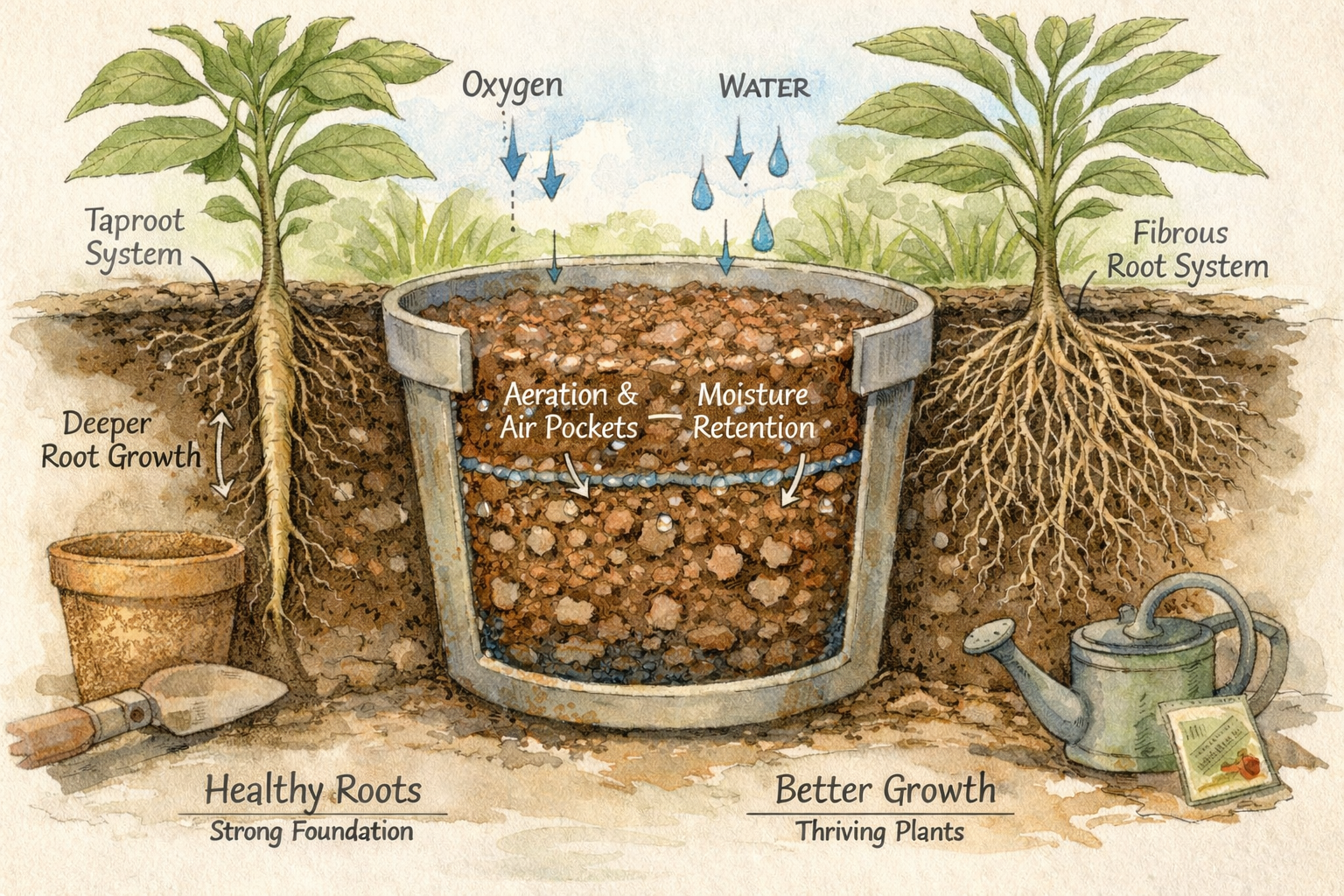
Plants develop different root systems depending on their species and environment. Taproots grow deep and anchor plants firmly, seeking water from lower soil layers. In contrast, fibrous root systems spread horizontally, forming dense networks that absorb moisture and nutrients efficiently.
In containers, fibrous root systems tend to dominate due to space limitations. This makes the structure of the growing medium critically important, it must allow roots to expand freely while maintaining access to both air and water.
Oxygen vs Water: The Critical Balance
One of the most overlooked aspects of root health is oxygen. Roots require oxygen for respiration, a process essential for nutrient uptake and growth. When a growing medium becomes waterlogged, oxygen is displaced, leading to root stress and, ultimately, decline.
Equally, insufficient moisture can limit nutrient transport and slow development.
The key is balance:
- Too much water → oxygen deprivation, root rot risk
- Too little water → dehydration, stunted growth
A well-structured medium helps maintain this equilibrium, ensuring roots have access to both air and moisture at all times.
The Role of Growing Media in Root Development
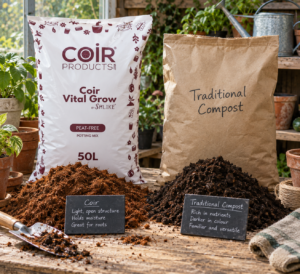
Not all growing media are created equal. Traditional soil, particularly in containers, can compact over time reducing pore space and restricting root movement.
By contrast, coir-based substrates are engineered for consistency. Crafted from the refined fibres and dust of coconut husks, coir provides:
- High air-filled porosity
- Excellent water retention without waterlogging
- A stable structure that resists compaction
This creates an ideal environment where roots can expand, branch, and establish quickly – forming the foundation for healthy plant growth.
Compaction vs Aeration: Why Structure Matters
Compaction is one of the most common yet invisible challenges in container gardening. As soil compresses, it limits both root expansion and oxygen availability.
Aeration, on the other hand, ensures:
- Continuous oxygen supply
- Improved drainage
- Stronger, more extensive root systems
Coir’s natural structure maintains air pockets even after repeated watering, supporting long-term root health in a way many traditional soils cannot.
Early Root Health Defines Long-Term Performance
The first few weeks of a plant’s life are critical. Poor root conditions at this stage can lead to:
- Slower growth
- Reduced nutrient uptake
- Increased susceptibility to stress
Conversely, plants that establish strong root systems early are more resilient, more productive, and better equipped to thrive throughout their lifecycle.
A Smarter Approach to Growing
At CoirProducts, we don’t just supply growing media — we support better growing outcomes. By understanding the science behind root development and choosing substrates that promote balance, aeration, and structure, growers can achieve consistently stronger results.
Because when roots thrive, everything above them follows.
 Share:

Leave a Reply