
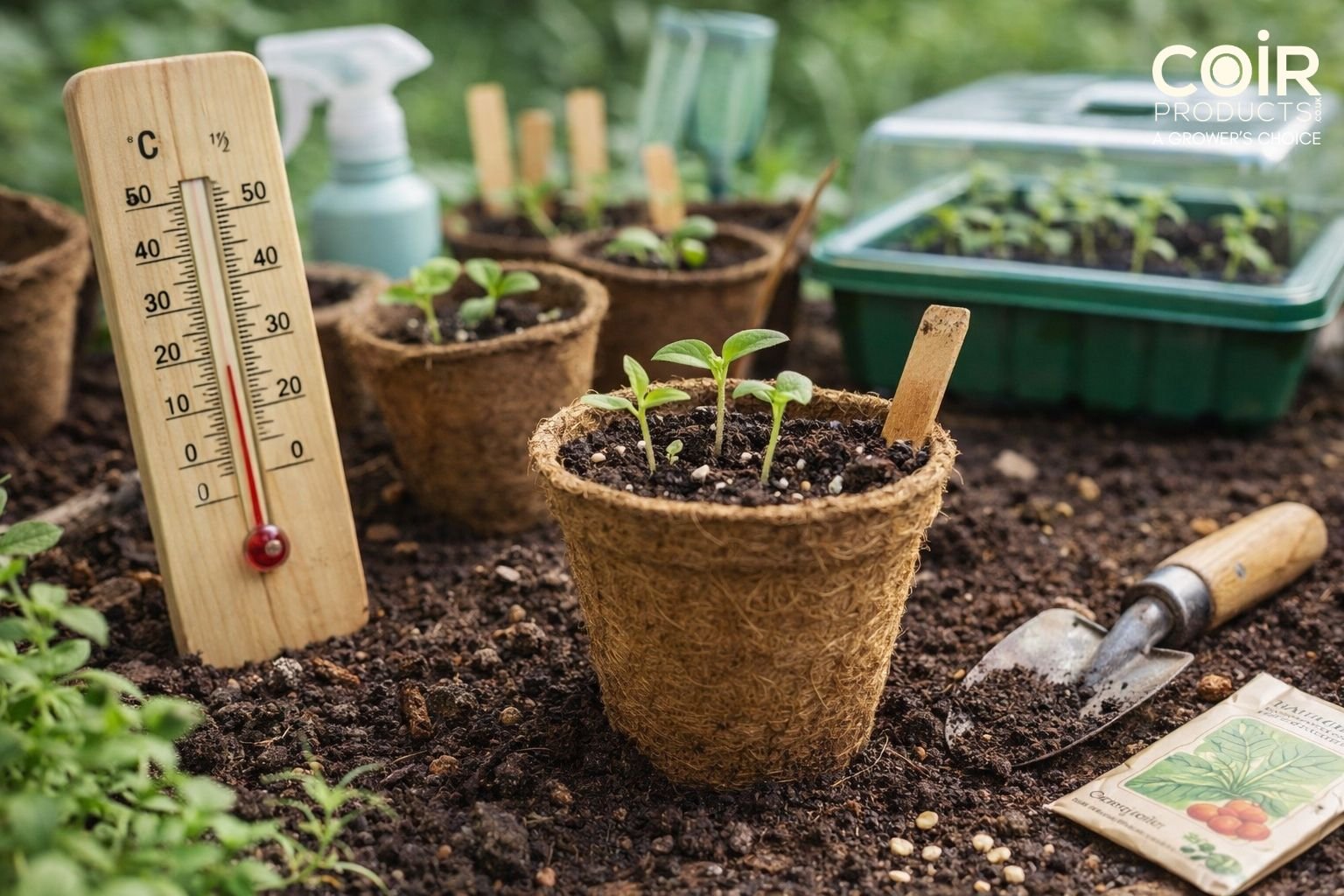
Successful gardening doesn’t begin when plants are visible it begins at the moment a seed decides to grow. Seed starting is one of the most critical stages in the plant lifecycle, yet it’s where many growers encounter failure. At CoirProducts, we approach propagation with precision combining practical insight with the science that drives consistent success.
This is not guesswork. This is control.
Germination Triggers: Creating the Right Conditions
For a seed to germinate, three essential conditions must be met:
- Moisture – activates the seed and begins metabolic processes
- Temperature – determines the speed and success of germination
- Oxygen – fuels respiration during early development
Too much water can suffocate seeds. Too little, and germination stalls. Temperature outside the optimal range slows or prevents growth entirely.
The goal is stability a controlled environment where seeds can transition smoothly from dormancy to active growth.
Common Failure Points (And Why They Happen)
Many seed-starting issues are not random they are environmental.
Overwatering is one of the most frequent mistakes. Saturated conditions reduce oxygen availability, leading to weak or failed germination.
Damping-off, a fungal condition, thrives in overly wet and poorly ventilated environments. It causes seedlings to collapse at the base, often overnight.
Other common issues include:
- Inconsistent moisture levels
- Poor drainage
- Low light after germination
Each of these can be traced back to one core problem: lack of environmental control.
Choosing the Ideal Propagation Medium
The medium you choose determines how well you can control moisture, air, and structure.
Traditional soil can be inconsistent and prone to compaction. For seed starting, this creates unnecessary risk.
Coir-based propagation mediums offer a more refined approach. Crafted from coconut husk fibres, they provide:
- Even moisture distribution
- Excellent drainage
- High air-filled porosity
This combination supports both germination and early root development without the instability often associated with soil.
Transitioning Seedlings Without Shock
Germination is only the beginning. The transition from seedling to established plant is where long-term success is defined.
Transplant shock occurs when roots are disturbed or exposed to sudden environmental changes.
To minimise this:
- Transplant at the right stage (typically when true leaves appear)
- Handle seedlings gently, avoiding root damage
- Maintain consistent moisture before and after transplanting
Using structured, stable growing media helps roots adapt quickly reducing stress and supporting continued growth.
Timing and Environmental Control
Timing is everything in seed starting.
Starting too early can lead to weak, leggy plants due to insufficient light. Starting too late shortens the growing window.
Equally important is environmental consistency:
- Maintain steady temperatures
- Ensure adequate light immediately after germination
- Provide airflow to reduce disease risk
Small adjustments at this stage can significantly influence final plant performance.
Building a Reliable Seed Starting System
Mastery comes from repeatability. When growers understand the principles behind germination and early growth, they can create systems that deliver consistent results.
At CoirProducts, we focus on enabling that control, through substrates that are stable, predictable, and crafted for performance.
Because when seeds are given the right start, everything that follows becomes stronger, healthier, and more reliable.
 Share:

Leave a Reply