
FREE DELIVERY MAINLAND, UK Dismiss
Skip to content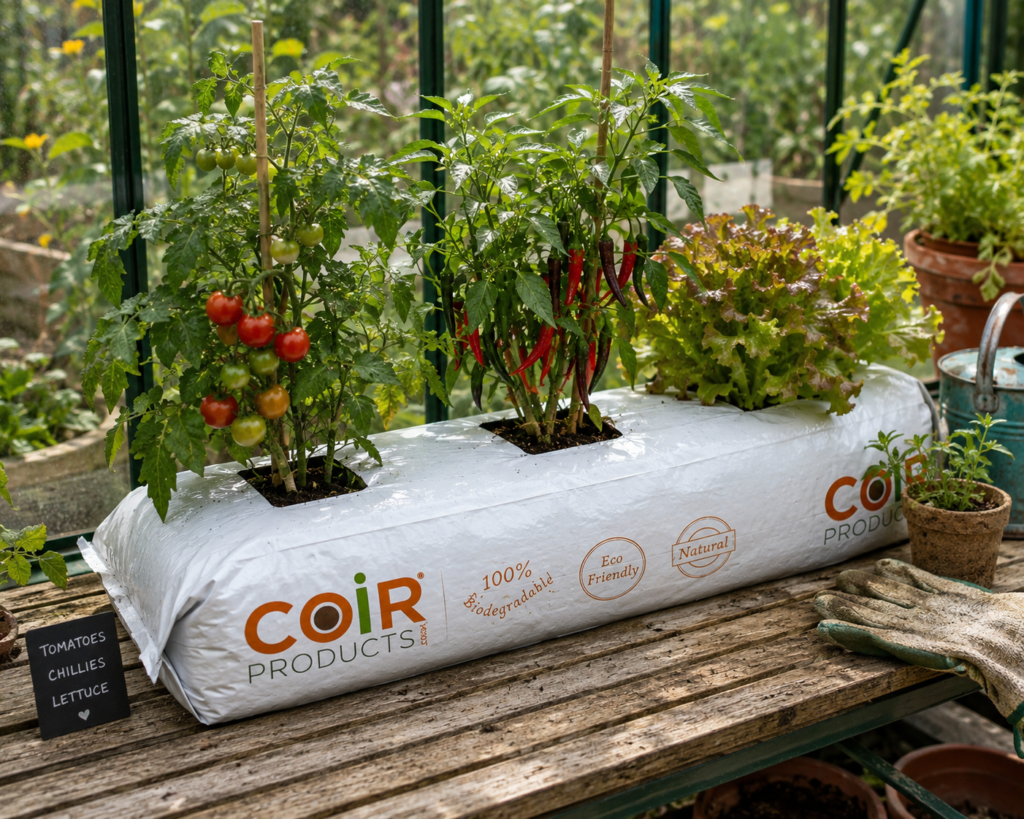
Not everyone has a vegetable patch or a greenhouse full of growing space. Sometimes, the only available spot is a sunny patio, a small courtyard or a corner of the garden.
That doesn’t mean you can’t grow your own.
Tomatoes, chillies, cucumbers and plenty of other crops can be grown in containers, provided they have enough room, water and the right growing conditions. And for gardeners who prefer not to dig over beds or handle large quantities of loose compost, growbags offer a convenient alternative.
At CoirProducts®, our Coir GrowBags are filled with a blend of coir growing media, giving gardeners a practical way to grow in smaller spaces.
But what makes a coir growbag different, and how can you get the most from one?
A coir growbag is a planting bag containing a growing medium made from coconut husk fibres.
Coir has become a familiar material in horticulture because of its ability to hold moisture while maintaining air spaces within the growing medium.
Our CoirProducts® GrowBags contain a blend of Coir Vital Grow® potting mix and Coir-Ditioner®, a coarser coir material that contributes to the structure of the mix.
Together, they provide a growing medium designed to retain moisture while allowing air to reach the roots.
Rather than planting directly into garden soil, you grow within the bag itself. This can be particularly useful where the ground is poor, space is limited or you simply want a more manageable growing area.
Tomatoes are probably the first crop that comes to mind when people think of growbags, and with good reason. They’re a familiar sight in greenhouses and on sunny patios throughout Britain.
But tomatoes aren’t the only option.
Chillies and peppers can also do well in growbags, provided they have sufficient warmth and light. Cucumbers are another possibility, although larger varieties need plenty of growing space and suitable support.
For something smaller, you might consider herbs or salad crops.
The important thing is to match the crop to the size of the growbag. A vigorous tomato plant will need considerably more root space, water and nutrition than a small herb.
It’s tempting to squeeze in an extra plant, particularly when space is limited, but overcrowding rarely makes things easier. Give each plant enough room to develop and you’ll find watering, feeding and general care much more manageable.
The growing medium makes a real difference to how a growbag behaves.
Coir has a naturally fibrous structure that absorbs and retains moisture, while also maintaining air spaces around the roots. Both are important for healthy plant development.
Our Coir GrowBags combine Coir Vital Grow® with Coir-Ditioner®, bringing together finer coir material and coarser fibres to create a structured growing medium.
This makes them a practical choice for gardeners who want a peat-free alternative to conventional growing media.
There’s also the convenience of having the growing medium contained within the bag. You can position it where it’s needed, prepare it for planting and grow without filling separate pots or digging into the ground.
Of course, coir isn’t a substitute for good gardening. Plants still need appropriate feeding, watering, drainage and light. Getting those things right matters just as much as the growing medium itself.
Before you start, decide where the growbag will sit.
A sunny, sheltered position is often suitable for crops such as tomatoes and peppers, while other plants may have different requirements. Make sure the surface is level and stable, particularly once the bag has been watered.
If your growbag contains compressed coir, it will need hydrating before planting. Follow the preparation instructions supplied with the product, adding water gradually and allowing the growing medium to expand properly.
Once hydrated, check that the coir has loosened evenly and that there are no dry, compacted sections.
You’ll also need suitable drainage and planting openings. Depending on the growbag design, these may need to be prepared before planting.
When you’re ready, make enough space for the roots of your chosen plants and settle them gently into the growing medium.
Avoid packing too many plants into one bag. It’s much better to give one or two plants suitable growing conditions than to overcrowd them from the beginning.
One of the things you’ll quickly notice with growbags is how much watering depends on the weather.
A growbag in a warm greenhouse during July will behave very differently from one on a sheltered patio in May.
Rather than watering to a strict timetable, check the growing medium regularly. Coir holds moisture well, but the surface can sometimes appear dry while the material underneath is still damp.
Water when needed, making sure moisture reaches the root area without leaving the bag permanently saturated.
Feeding is equally important.
Coir provides a useful growing medium, but it shouldn’t automatically be treated as a complete source of plant nutrition. Fruiting crops such as tomatoes, peppers and cucumbers can have considerable nutrient requirements as they develop.
Check the nutrient content of your particular growbag and use an appropriate fertiliser where needed, following the guidance for your crop.
A little attention to watering and feeding throughout the growing season will make a much bigger difference than simply planting and hoping for the best.
One of the nicest things about growbags is that they make growing possible in places where a traditional vegetable bed might not be practical.
A sunny patio can become a small growing area for tomatoes. A greenhouse bench or suitable floor space can accommodate a few carefully positioned bags. Even a modest garden can have room for a seasonal crop without permanently changing the layout.
Our Coir GrowBags are available in two lengths, 50 cm and 100 cm, giving gardeners a choice depending on their available space and intended planting.
Before choosing, think about the mature size of the plants rather than just how much room the bag occupies.
A small seedling might look rather lonely when first planted, but by midsummer it could need considerably more space, support and attention.
It’s also worth remembering that a hydrated growbag can be heavy. If you’re growing on a balcony or raised surface, make sure it can safely support the weight.
It’s a question worth asking at the end of the growing season, particularly if the bag and growing medium still appear to be in reasonable condition.
Whether a growbag can be reused depends on how it has been used, the health of the previous crop and the condition of the material.
If the plants suffered from disease, or the growing medium has become badly compacted or contaminated, starting again with fresh material may be the better choice.
Where reuse is appropriate, the growing medium may need refreshing and its nutrient supply reconsidered before planting another crop.
Always check the manufacturer’s recommendations and assess the condition of the bag before deciding.
There’s a particular satisfaction in picking a tomato you’ve grown yourself or adding a few home-grown chillies to a meal.
And you don’t need an allotment or a large garden to enjoy it.
A well-positioned growbag, a suitable plant and a little regular care can be enough to get started.
At CoirProducts®, we’ve specialised in coir growing media and garden products since establishing our UK business in 2015. Our Coir GrowBags bring together Coir Vital Grow® and Coir-Ditioner® in a convenient planting format for gardeners who want to make the most of the space they have.
Whether you’re planning a few tomatoes in the greenhouse or trying your hand at growing vegetables on the patio, it’s a practical option worth considering.
Explore our CoirProducts® Coir GrowBags and choose the size that suits your growing plans.
Added to cart
Check out our shop to see what's available