Growing your own vegetables has never been more popular.
Across the UK, gardeners are transforming patios, allotments, greenhouses and back gardens into productive growing spaces capable of producing everything from salad crops and herbs to tomatoes, courgettes and beans.
At the same time, interest in peat-free gardening continues to grow as gardeners seek practical alternatives to traditional growing media.
Yet one question remains surprisingly common:
Can vegetables really thrive in peat-free growing media?
The answer is yes.
In fact, many gardeners are discovering that a well-designed peat-free growing system can produce healthy plants, strong root development and impressive harvests throughout the growing season.
In this guide, we explore everything UK gardeners need to know about peat-free vegetable growing, from seed sowing and propagation through to harvesting, whilst examining the role coir can play in creating productive growing environments.
Peat-free gardening refers to growing plants without using peat-based composts or growing media.
Instead, gardeners use alternative materials capable of supporting healthy root development and plant growth.
Common peat-free ingredients include:
Among these materials, coir has become increasingly popular because of its ability to retain moisture whilst maintaining excellent root-zone aeration.
The shift towards peat-free gardening is not simply about changing compost.
Many gardeners are looking for growing systems that offer:
Successful vegetable gardening relies heavily on what happens beneath the surface.
Healthy roots often determine whether a crop struggles or thrives.
Most gardening advice focuses on leaves, flowers and fruit.
However, vegetables begin with roots.
Roots are responsible for:
When roots develop properly, plants are generally stronger, healthier and more productive.
This is why the choice of growing medium is so important.
Coir is produced from coconut husk fibres and has become widely used by both professional growers and home gardeners.
Unlike heavy soils that can compact over time, coir helps create an open root environment where plants can access both moisture and oxygen.
Key benefits include:
Vegetables require consistent moisture throughout the growing season.
Coir can retain water whilst still maintaining good drainage.
Roots need oxygen to grow effectively.
The natural structure of coir helps maintain air spaces around roots.
Unlike some composts that become difficult to rehydrate after drying out, coir is generally easier to rewet.
Particularly useful for raised beds, grow bags, greenhouses and container gardening.
Every successful harvest begins with healthy seedlings.
Many vegetables benefit from being started indoors before being transplanted outside.
Popular vegetables for seed starting include:
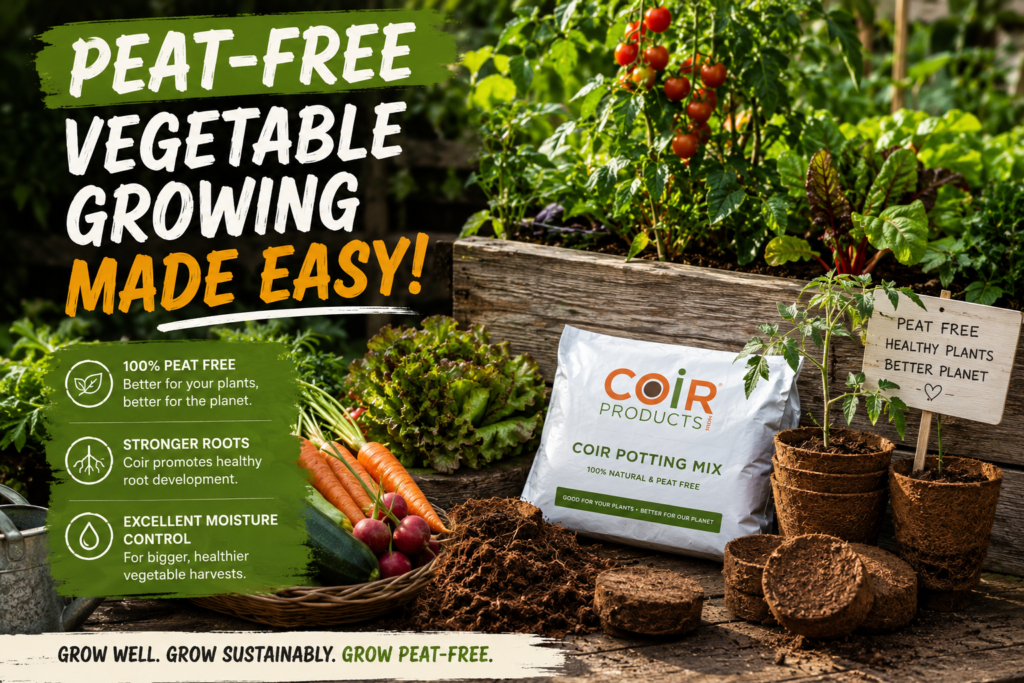
Coir discs provide a convenient starting point for many seeds.
Once hydrated, they expand into small growing plugs that support early root development whilst maintaining consistent moisture levels.
Benefits include:
One of the most stressful moments in a plant’s life is transplanting.
Damaged roots often result in slower growth and delayed establishment.
Coir pots can help minimise this disruption.
Because seedlings can be planted directly into their final growing position, roots experience less disturbance during transplanting.
This can be particularly useful for:
The best vegetable growing media should provide a balance between:
Coir-based potting mixes are commonly used because they help create a stable root environment suitable for a wide range of vegetable crops.
A healthy root zone often results in:
Not every gardener has access to large growing spaces.
Fortunately, many vegetables perform exceptionally well in containers.
Ideal crops include:
Using a quality coir-based potting mix helps maintain moisture levels whilst preventing excessive compaction around roots.
Grow bags remain one of the most practical ways to cultivate vegetables in the UK.
They are particularly useful for:
Coir grow bags provide:
Many crops including tomatoes, cucumbers, peppers and chillies perform exceptionally well in grow bag systems.
Many vegetable-growing problems originate from inconsistent watering.
Plants generally prefer:
Coir’s water-holding capacity can help create a more forgiving root environment, particularly during periods of warm summer weather.
Even moisture-loving vegetables require oxygen around their roots.
Extended dry periods can slow growth and reduce yields.
Containers that are too small often restrict development.
Vegetables require nutrients throughout the growing season.
Many crops benefit from an early start.
Many crops perform exceptionally well in coir-based growing systems.
Popular options include:
The versatility of coir makes it suitable for both beginners and experienced gardeners alike.
Peat-free vegetable gardening is not simply a trend.
It is becoming an increasingly common approach amongst gardeners seeking reliable growing performance and practical growing solutions.
The foundation of successful vegetable growing remains unchanged:
Healthy roots produce healthy plants.
Whether sowing seeds in coir discs, raising seedlings in coir pots, planting into coir-based potting mixes or cultivating crops within grow bags, the goal remains the same — creating the conditions vegetables need to thrive.
With good preparation, consistent care and a healthy root environment, gardeners can enjoy productive harvests throughout the growing season whilst building a more resilient and rewarding growing space
Added to cart
Check out our shop to see what's available